
What Is a Two Stroke vs Four Stroke Lawn Mower Engine?
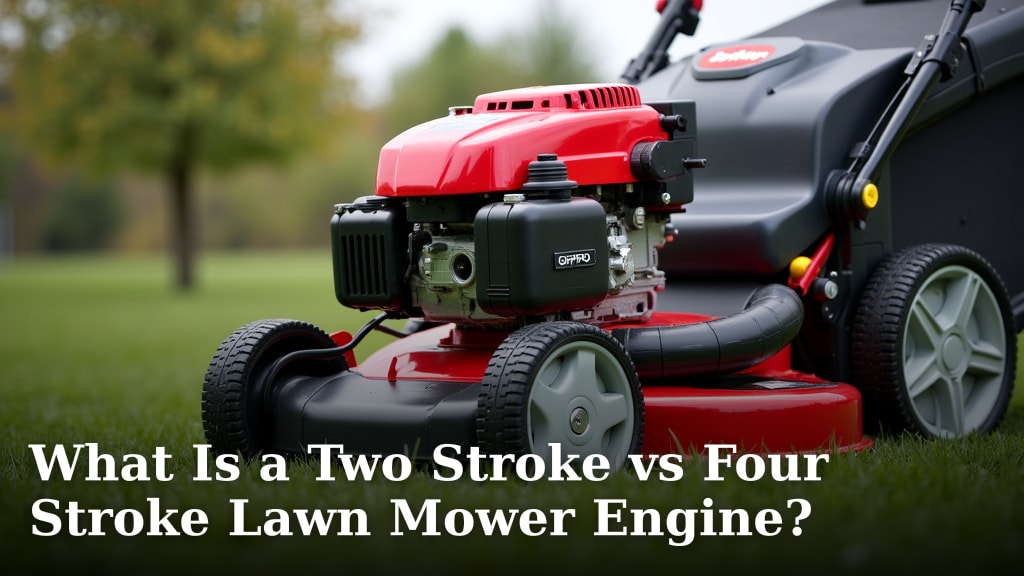
A two-stroke lawn mower engine mixes oil with gasoline for lubrication and fires on every crankshaft revolution, while a four-stroke engine has separate oil and fuel, lubricating and firing every other revolution. Your choice depends on whether you prioritize simplicity and lighter weight (two-stroke) or fuel efficiency and cleaner emissions (four-stroke).
We found that understanding these fundamental differences can help you choose the right mower for your yard. Four-stroke engines generally offer a quieter operation and require less maintenance than their two-stroke counterparts. Many lawn care professionals prefer four-strokes for their durability and smoother running.
- Two-stroke engines mix oil and gas, firing every revolution.
- Four-stroke engines have separate oil, firing every other revolution.
- Four-strokes are typically more fuel-efficient and quieter.
- Two-strokes are often lighter and simpler in design.
- Your needs will determine which type is best for you.
Let’s walk through the key distinctions to help you decide which engine type is the better fit for your lawn care needs.
Understanding the Two-Stroke vs. Four-Stroke Lawn Mower Engine
Choosing the right lawn mower engine comes down to understanding a few key differences. We’re going to break down what makes a two-stroke engine tick and how a four-stroke engine operates. This will help you figure out which one is the perfect fit for your yard work.
How a Two-Stroke Engine Works: Simplicity at its Core
Think of a two-stroke engine as the simpler, more energetic cousin. It gets its name because it completes its power cycle in just two strokes of the piston. These strokes are the intake/compression and the power/exhaust strokes. What’s really interesting is that it fires every time the piston goes up and down. This makes it really quick and powerful for its size.
The Two-Stroke Fuel Mixture: A Special Brew
Here’s where two-stroke engines really stand out. They don’t have a separate oil reservoir like your car. Instead, you mix oil directly with the gasoline before you fill up the tank. This oil serves as the lubricant for the engine’s moving parts. Many experts say this oil-gas mix is what gives two-strokes their distinct smell and smoky exhaust. You’ll often find this in smaller, lighter equipment because the design is so straightforward.
Advantages of Two-Stroke Engines
- Lighter Weight: Because they have fewer parts and no separate oil system, they are typically much lighter. This makes them easier to maneuver and transport.
- Simpler Design: Fewer moving parts mean less can go wrong. This can translate to easier repairs if something does break.
- Higher Power-to-Weight Ratio: They can often produce more power for their size compared to four-stroke engines.
Disadvantages of Two-Stroke Engines
- Less Fuel Efficient: Burning oil with the gas means they tend to be less fuel-efficient than four-strokes.
- Higher Emissions: The oil burned along with the fuel creates more pollution and a distinctive exhaust smell.
- Requires Pre-Mixing: You always need to remember to mix the oil and gas correctly. Get this wrong, and you can seriously damage the engine.
- Noisier Operation: They tend to be louder and vibrate more than four-stroke engines.
How a Four-Stroke Engine Works: The Steady Performer
A four-stroke engine operates on a more complex, yet often more efficient, four-step cycle. Think of it like your car’s engine, but on a smaller scale. These four strokes are intake, compression, power, and exhaust. The piston moves up and down twice for each power cycle, and the engine fires only once every two revolutions of the crankshaft. This methodical process is key to its performance.
The Four-Stroke Lubrication System: Separate and Smart
Unlike their two-stroke counterparts, four-stroke engines have a dedicated oil system. You’ll find a separate oil fill cap and a dipstick to check the oil level. The oil circulates through the engine to lubricate all the moving parts. This separation of oil and fuel means the engine doesn’t burn oil during operation. This is a major reason why they tend to run cleaner and are more fuel-efficient. Many lawn care professionals prefer this system for its reliability.
Advantages of Four-Stroke Engines
- Better Fuel Efficiency: They generally consume less gasoline for the same amount of work.
- Cleaner Emissions: Burning only gasoline means less pollution and a quieter, cleaner exhaust.
- Quieter Operation: Four-stroke engines are typically much quieter and run more smoothly than two-strokes.
- No Fuel Mixing Required: You just fill up with regular gasoline, making it convenient.
- Longer Lifespan: The dedicated lubrication system often leads to greater engine durability.
Disadvantages of Four-Stroke Engines
- Heavier Weight: The added components for the oil system make them heavier.
- More Complex Design: More parts can mean more potential issues and more complex repairs.
- Potentially Higher Initial Cost: They can sometimes be more expensive upfront.
Key Differences at a Glance: Two-Stroke vs. Four-Stroke
To help you visualize the distinctions, let’s lay out the main differences side-by-side. Think of it as a quick reference guide to help you remember the key features.
| Feature | Two-Stroke Engine | Four-Stroke Engine |
|---|---|---|
| Fuel/Oil Handling | Oil mixed directly with gasoline | Separate oil reservoir |
| Power Cycle | 2 strokes per power cycle (fires every revolution) | 4 strokes per power cycle (fires every other revolution) |
| Weight | Lighter | Heavier |
| Fuel Efficiency | Lower | Higher |
| Emissions | Higher, smoky exhaust | Lower, cleaner exhaust |
| Noise Level | Louder | Quieter |
| Maintenance | Simpler, but requires careful fuel mixing | Requires oil changes, but simpler fueling |
Which Engine Type is Right for Your Lawn Mower?
Now that you know the mechanics, let’s talk about what this means for you and your lawn. Your choice really depends on your priorities. If you have a small yard and need something lightweight, a two-stroke might be appealing. If you have a larger area and value efficiency and quieter operation, a four-stroke is likely a better bet.
When a Two-Stroke Might Be Your Best Pick
You might lean towards a two-stroke if you own a smaller, handheld piece of equipment like a string trimmer or a leaf blower. Their lightweight nature and high power output are often ideal for these tools. For a lawn mower, it would typically be on a very basic, small, and inexpensive model. You’ll need to be comfortable with the pre-mixing of fuel and potentially dealing with a bit more noise and smoke.
Why a Four-Stroke is Often the Go-To Choice
For most homeowners looking for a reliable lawn mower, a four-stroke engine is usually the way to go. They offer a smoother, quieter experience and are much more fuel-efficient. The ease of just filling up with gasoline and the reduced emissions make them a popular choice. Many experts agree that for general lawn mowing, the durability and user-friendliness of four-strokes make them the standard. They are also common on self-propelled models, which can be a real back-saver.
Simple Checklist for Deciding Your Engine Type
To help you make the final call, consider these quick points:
- Do you prefer lighter equipment for easy carrying?
- Are you okay with mixing oil and gas every time you refuel?
- Is noise and exhaust a major concern for you?
- How large is your lawn, and how often do you mow?
- Do you want the most fuel-efficient option available?
- Are you looking for the simplest possible refueling process?
Conclusion
You’ve learned the core differences between two-stroke and four-stroke lawn mower engines. Two-strokes offer simplicity and a lighter feel, ideal for smaller tasks or handheld equipment. Four-strokes provide better fuel efficiency, quieter operation, and often more durability for your main lawn mowing needs. Weigh your yard size, your preference for ease of use, and your comfort with fuel mixing. Now you’re ready to make an informed decision for your next mower purchase. Consider visiting your local dealer to test drive models with each engine type before you buy.
Frequently Asked Questions
What kind of gas do I use for a two-stroke mower?
You’ll need a specific mixture of regular gasoline and two-stroke oil. Always check your mower’s manual for the exact recommended ratio to avoid engine damage. Using the wrong mix can lead to serious problems with your engine.
How often should I change the oil in a four-stroke mower?
Most four-stroke lawn mower engines require an oil change at least once per mowing season, or after a set number of operating hours, typically around 25-50. Refer to your owner’s manual for the most accurate maintenance schedule for your specific model.
Are two-stroke mowers bad for the environment?
Two-stroke engines generally produce higher emissions because they burn oil with the fuel, resulting in more smoke and pollutants. Four-stroke engines are considered more environmentally friendly due to their cleaner burning process.
Can I use a two-stroke engine for a large lawn?
While possible, a two-stroke engine might not be the most practical choice for a large lawn. Their lower fuel efficiency and often louder operation can become drawbacks. A four-stroke engine is usually better suited for handling bigger areas with greater efficiency and comfort.
Which engine type is better for beginners?
For most beginner lawn mower users, a four-stroke engine is typically recommended. The convenience of not having to mix fuel, along with quieter operation and simpler maintenance, makes them more user-friendly for those new to lawn care equipment.
