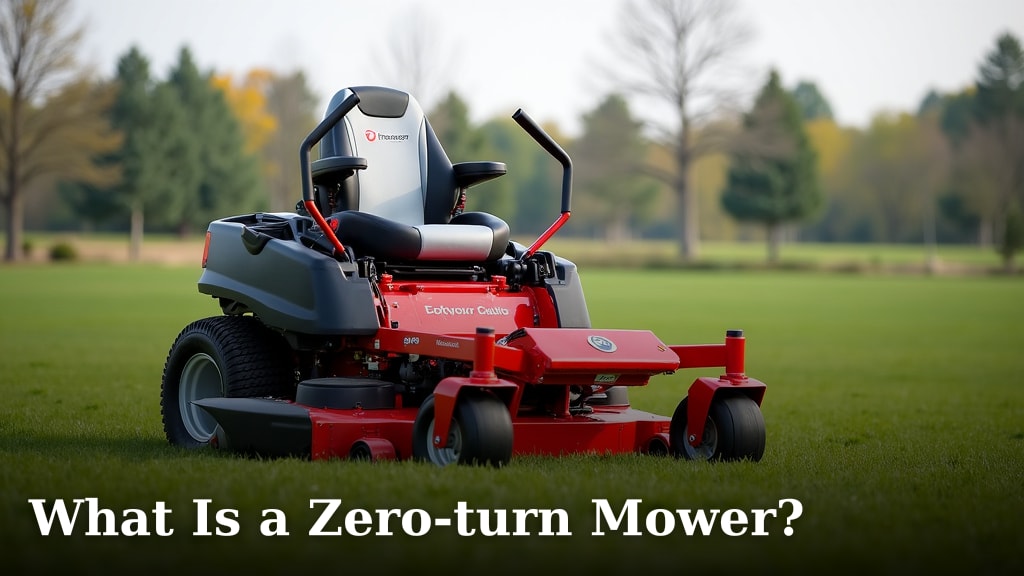
How to Choose a Commercial Zero-Turn Mower
Choose a commercial zero-turn mower by matching its deck, transmission and service access to your daily workload. Check the maker’s maintenance schedule, parts support, cutting width and fit for the terrain you mow.
On this page (8 sections)
- What should you check on a commercial grade zero-turn mower?
- How do you assess deck construction?
- How can you compare transmission durability?
- Why does service access matter for daily mowing?
- How should you match deck width to the route?
- Which other features affect daily use?
- Which buying mistakes should you avoid?
- Which mower fits your workload?
Choose a commercial zero-turn mower by comparing deck construction, transmission durability and service access against the hours and conditions you expect to mow. For daily work, confirm the exact model’s maintenance schedule, parts support and fit for your routes before comparing comfort or extra features.
A “commercial” label is only a starting point. Two mowers with similar cutting widths can differ in deck design, transmission, service needs and the support available near you.
If you’re still deciding whether zero-turn steering suits your property, first read what a zero-turn mower is. For a wider look at buying priorities, see how to choose a good lawn mower.
What should you check on a commercial grade zero-turn mower?
Check the mower’s deck, transmission, service access and parts support before choosing by engine power or cutting width. Those details affect whether the machine fits your daily work and how easily you can keep it maintained.
| Area | What to check | Why it matters |
|---|---|---|
| Deck | Construction, reinforcement, discharge design and blade access | The deck takes regular contact with grass, debris and uneven ground |
| Transmission | Exact model, maintenance needs and approved workload | The transmission must match the hours and terrain you expect |
| Service access | Access to filters, belts, blades and grease points | Easier access can make scheduled maintenance more practical |
| Fit | Deck width, gates, slopes and storage space | A mower that cannot reach or fit a work area limits its usefulness |
| Support | Local parts, service options and warranty terms | Delays can keep equipment out of service during busy periods |
Ask for the exact model number and operator manual. Similar names can cover different configurations, so confirm the deck and transmission fitted to the mower you plan to buy.
How do you assess deck construction?
Assess the deck by checking its material, reinforcement, shape and service access in the manufacturer’s documentation. Ask how the maker expects you to inspect and maintain it under the conditions you mow.
A heavy-looking deck does not prove that a mower will last longer. Look for clear information about construction and service procedures, then compare those details across the exact models in your budget.
Think about what the deck will encounter. Open, level lawns put different demands on equipment than rough ground, roots, curbs or frequent trailer loading.
The width also needs to fit your route. A wide deck may reduce passes in open areas, but measure the narrowest gate and turning space before deciding that bigger is better.
Check blade access and cleaning points in person or in the manual. If routine inspection requires removing several parts, ask a dealer what that service involves and how often the maker recommends it.
How can you compare transmission durability?
Compare the transmission model and its maintenance requirements, rather than relying on a general “commercial” claim. Confirm the maker’s approved use for your expected hours, slopes and any towing.
Ask the dealer to identify the transmission by model and provide its service schedule. Check which fluids, filters or inspections it requires, and whether those parts are stocked nearby.
Daily mowing adds hours quickly. Estimate your weekly workload and annual season before buying, then ask whether the mower’s transmission is intended for that level of use.
Terrain matters too. Slopes, repeated starts and heavy loads can change what equipment is suitable, so use the maker’s instructions for the specific mower.
Don’t assume that every zero-turn model is approved for the same grade or towing task.
If you plan to tow a light yard trailer, check the mower manual for an approved hitch and load. The HOWBOW Zero Turn Trailer Hitch With Hitch is an accessory option, but the mower’s own instructions should decide whether and how you use a hitch.
Why does service access matter for daily mowing?
Service access matters because daily use brings routine inspections and maintenance closer together. Choose a mower whose service points and replacement parts are practical for your schedule.
Review the operator manual before buying. Look for the recommended checks for blades, belts, filters, tires, lubrication and transmission care, then note which jobs need tools or dealer service.
Ask a local service shop whether it works on the exact model and how it sources common parts. A mower can have strong specifications and still be a poor work choice if routine service means long waits.
Check the warranty terms carefully, including who performs covered service and what maintenance records you need to keep. Save receipts and follow the schedule so you can document upkeep.
Plan storage and protection along with service. A cover can help keep dust and weather off parked equipment, but it does not replace cleaning or maintenance; the Kipiea Riding Lawn Mower Cover 600D Heavy is one option to compare for a riding mower.
How should you match deck width to the route?
Match deck width to the tightest access point and the largest open area on your route. Measure gates, paths and storage before choosing a cutting width.
Walk the property and note narrow gates, trees, slopes, landscaping and places where you need to turn. Measure the clear opening, not just the nominal gate size, and account for the mower’s overall width.
A broad deck can reduce the number of passes on a large, open lawn. It may add little value if most of your time goes to trimming around obstacles or moving between small sections.
If your work includes several properties, compare the routes rather than focusing on the largest one. You may need a deck that fits the majority of access points, or a different machine for a route with unusually tight spaces.
Which other features affect daily use?
Compare seat comfort, controls, visibility and storage fit after confirming the deck and transmission suit the job. These details influence how easily you can complete repeated mowing sessions.
Sit on the mower and check whether the seat and controls fit you. Confirm that you can see the cutting path and reach the controls without shifting your posture.
Check the manufacturer’s instructions for mowing on slopes and around obstacles. A zero-turn mower’s steering can help with tight turns, but the model’s limits and safe operating guidance still apply.
Measure the trailer, shed or equipment bay where the mower will live. Check clearance around the parked machine for access to the service points and room to load it safely.
If you’re comparing models for a particular rider, our guide to the best zero-turn mower for seniors covers fit and ease-of-use considerations. For a brand-specific comparison, see best Gravely zero-turn mowers.
Which buying mistakes should you avoid?
Avoid buying on deck width, engine size or a commercial label alone. The exact model’s service needs, route fit and parts support should match your work.
- Ignoring access: Measure gates and storage openings before choosing a wide deck.
- Skipping the service schedule: Read the manual and price the maintenance you’ll need to perform.
- Assuming all transmissions are alike: Identify the exact transmission and check its approved workload.
- Overlooking support: Call a local dealer or repair shop about parts and service for that model.
- Buying for a rare task: Don’t pay for capabilities you don’t need without comparing the added maintenance and cost.
- Skipping a used-mower inspection: Check records and condition, and arrange a qualified assessment when needed.
A written checklist makes dealer visits easier. Record your weekly mowing hours, terrain, route width, storage limits and the service questions you need answered.
Which mower fits your workload?
Choose a commercial zero-turn mower when its documented service life, route fit and support match frequent work. For occasional mowing, compare residential models as well as commercial options before deciding.
Start with deck construction and the exact transmission. Then confirm the maintenance schedule, nearby parts and service, safe-use limits, and whether the mower fits your gates and storage.
For a broader model comparison, see Best Zero-Turn Mower 2026. If the job is a smaller lawn rather than daily commercial work, the Greenworks 40V 16in Push Lawn Mower is a walk-behind option with a 16 in cutting path, 5-position height adjustment, and mulch or rear-bagging modes.
A cover can help keep a parked mower covered, while an approved hitch may suit a towing task. Choose either accessory only after checking fit and the mower maker’s instructions.
Frequently asked questions
What makes a zero-turn mower commercial grade?
Commercial grade usually refers to a mower built and supported for frequent, demanding work, but the label alone does not tell you how long it will last. Compare the deck construction, transmission, service schedule, parts access, warranty terms and the conditions the maker approves.
How wide should a commercial zero-turn mower deck be?
Choose a deck width that fits the open areas you mow and the narrowest gates or passages on your route. A wider deck can cover open ground in fewer passes, but it may not fit through access points or around tight obstacles.
How do I compare zero-turn mower transmissions?
Compare the transmission model, service requirements, approved workload and parts support in the mower’s manual and maker documentation. Ask a dealer which transmission is fitted to the exact model and whether it suits your expected hours, slopes and towing needs.
Is a commercial zero-turn mower worth it for a large yard?
It may make sense when a large yard creates frequent mowing hours and the mower’s service needs fit your budget and schedule. For occasional use, compare the total cost and maintenance demands with residential options before paying for a commercial model.
What should I check before buying a used commercial zero-turn mower?
Confirm the model and hours, then inspect the deck, blades, belts, tires, controls and transmission for damage or uneven wear. Ask for maintenance records, check parts availability and arrange a qualified inspection if you cannot assess the mechanical condition yourself.