
How To Replace Brake Cable On Toro Lawn Mower?
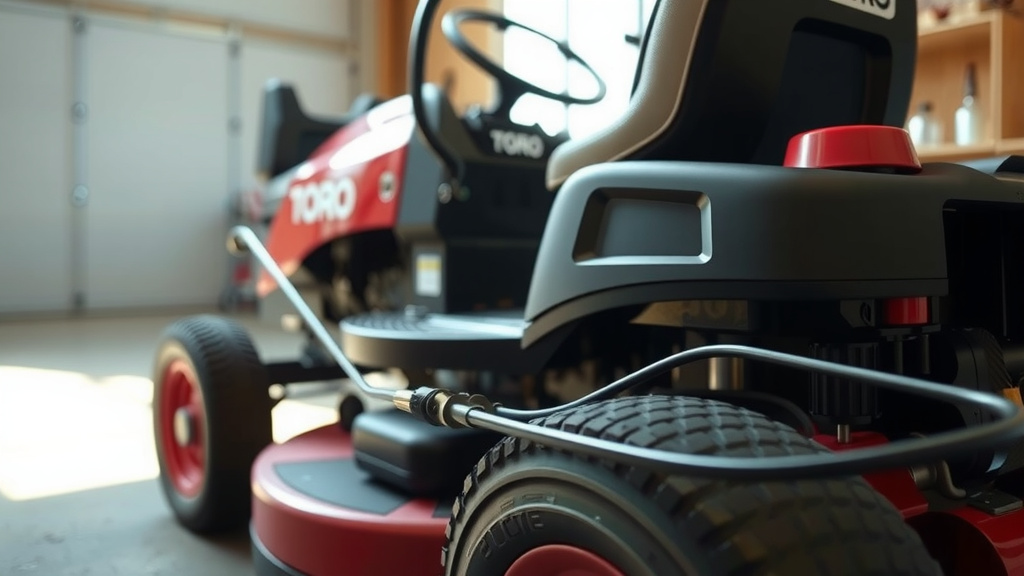
To replace the brake cable on your Toro lawn mower, you will first need to disconnect the spark plug for safety. Then, you’ll detach the old cable from both the handle and the engine’s brake lever, carefully routing the new Toro lawn mower brake cable back through the same path and securing it.
The process typically involves removing a few bolts, unhooking the old cable, and then connecting the new one, ensuring proper tension for the brake to engage and disengage correctly.
- Always begin by disconnecting the spark plug to prevent accidental starts.
- Gather your tools: wrenches, pliers, and the specific replacement cable for your Toro model.
- Carefully remove the old cable from its connection points at the handle and the engine’s brake lever.
- Thread and secure the new brake cable, making sure it follows the original routing.
- Adjust the cable tension, reconnect the spark plug, and test the brake for correct operation.
How To Replace Brake Cable On Toro Lawn Mower?
Replacing your Toro lawn mower’s brake cable involves safely disconnecting power, carefully removing the old cable, and installing a new one, then adjusting it for optimal operation.
Why Does Your Brake Cable Need Replacing?
Your lawn mower’s brake cable is a vital component. It connects the safety bail on your handle to the engine’s brake mechanism. When you release the bail, the cable pulls, engaging the brake and stopping the engine. Think of it like a bicycle brake cable, but for your engine.
Identifying a Failing Brake Cable
How do you know it’s time for a change? You might notice the engine fails to stop when you release the bail. Or perhaps the engine won’t start because the brake isn’t fully disengaging. These are clear signs of trouble, often indicating a stretched or broken cable.
Sometimes, the cable might look fine but is simply sticky or rusted inside its housing. This prevents smooth operation. We found that a visual inspection can often reveal fraying or kinks.
Is This a DIY Job for You?
Replacing a brake cable on your Toro mower is a manageable task for most homeowners. You don’t need specialized training. With the right tools and a little patience, you can absolutely tackle this yourself. It saves money and gives you a great sense of accomplishment!
Safety First: Before You Begin
Before you even grab a wrench, safety is paramount. You are working with a machine that can start unexpectedly. Always, and we mean always, disconnect the spark plug wire. Pull it off the spark plug and tuck it away somewhere it won’t accidentally reconnect. This prevents the engine from starting while you’re working.
Wearing work gloves is also a good idea. Moving around metal parts can cause scrapes. A little protection goes a long way.
Essential Tools for the Job
Having the right tools makes the job much smoother. You won’t want to stop midway to search for something. We recommend laying everything out beforehand.
- New Toro brake cable (specific to your mower model)
- Pliers (needle-nose and regular)
- Wrench set (metric or SAE, depending on your mower)
- Screwdriver set (Philips and flathead)
- Work gloves
- Wire cutters (optional, for stubborn old cables)
Finding the Right Replacement Cable
This is a crucial step. Not all brake cables are universal. Your Toro mower has a specific part number. We found that checking your owner’s manual is the best way to identify the exact cable needed. If you don’t have the manual, look for the model number on the mower deck and search online using “Toro [Your Model Number] brake cable.” Using the wrong cable can cause installation issues or improper brake function.
Step-by-Step: Removing the Old Cable
Okay, with safety measures in place and tools ready, let’s get to it. Removing the old cable is often the trickiest part, as it might be rusted or stiff.
Disconnecting from the Handlebar
Start at the top, near the handle. The brake cable usually connects to the safety bail lever. You’ll likely see a small Z-bend or a barrel-style end fitting into a slot. Use pliers to compress any clips or spring, then carefully detach the cable. Sometimes, a screwdriver can help pry it out.
Detaching from the Engine Brake Lever
Now, move down to the engine. The cable runs along the handle and connects to a lever on the engine block. This lever is what actually engages the brake. You’ll need to locate this point, which is often near the carburetor or flywheel. Again, use pliers to unhook the cable end from the lever. There might be a spring holding it in place. Many experts say to take a photo before you disconnect, this helps remember the routing.
You may also need to free the cable from any clamps or guides along the handle or deck. These guides keep the cable in place and away from moving parts. Carefully pull the old cable out from these guides.
Installing Your New Toro Brake Cable
With the old cable out, putting in the new one is essentially reversing the steps. Patience is your friend here.
Routing the New Cable
This is where that photo might come in handy! Feed the new cable through all the same clamps and guides that the old one used. Proper routing prevents the cable from getting pinched or damaged during operation. It’s like tracing a path in the woods; follow the one already laid out.
Connecting to the Engine and Handle
Start by connecting the cable to the engine brake lever first. This often gives you a bit more slack to work with. Make sure the cable end is securely seated in its slot on the lever. Then, move back up to the handle. Connect the other end of the cable to the safety bail. You may need to squeeze the bail a bit to create enough slack to fit the Z-bend or barrel end into its slot. Ensure it’s firmly attached and not loose.
Adjusting Cable Tension for Perfect Stop
Proper tension is key. Too loose, and the brake won’t engage. Too tight, and the engine might not start, or the brake could drag. Many Toro mowers have an adjuster nut along the cable housing, usually near the handle or engine. Tightening this nut increases tension, loosening it reduces it.
You want enough tension so that when you release the safety bail, the brake engages quickly and the engine stops. When you pull the bail, the brake should fully disengage, allowing the engine to start easily. We found that a good starting point is when there’s minimal slack in the cable, but it’s not stretched tight when the bail is disengaged.
Testing Your Mower’s Brake System
Once the cable is installed and adjusted, it’s time to test. First, reattach the spark plug wire. Then, start the mower. Let it run for a moment. With the engine running, release the safety bail. The engine should promptly stop. If it doesn’t, or if it takes a long time to stop, your cable might be too loose. If the mower struggles to start, the cable might be too tight. Adjust and retest as needed until it functions perfectly.
Common Troubleshooting Tips
Sometimes things don’t go perfectly the first time. It happens!
| Symptom | Possible Solution |
|---|---|
| Engine won’t stop | Increase cable tension; check cable routing. |
| Engine won’t start | Reduce cable tension; ensure brake is fully disengaged. |
| Bail feels stiff/sticky | Ensure cable isn’t pinched; lubricate pivot points. |
| Cable pops out of connection | Confirm correct cable type; ensure secure seating. |
When to Consider Professional Help
While this is a DIY-friendly task, there are times when calling a professional is a good choice. If you’ve tried everything and the brake still isn’t working right, or if you encounter other engine issues during the process, it might be time for an expert. For instance, if the engine’s brake lever itself is bent or broken, that’s beyond a cable replacement. A local small engine mechanic can diagnose deeper problems quickly.
Maintaining Your New Brake Cable
To extend the life of your new cable, a little maintenance helps. Keep the cable and its connection points clean. Occasionally, you can apply a light lubricant to the pivot points on the brake lever and where the cable enters its housing. This reduces friction and prevents rust, ensuring smooth and consistent operation. Regular inspections can catch wear early.
Conclusion
Replacing a brake cable on your Toro lawn mower doesn’t have to be daunting. By following these steps, prioritizing safety, and ensuring you have the right parts, you can restore your mower’s essential safety function. You’ve not only fixed a problem but gained confidence in maintaining your equipment. Your mower will be stopping reliably again, keeping you safe in the yard.
FAQs
How do I know if my Toro mower has a brake cable or a different stopping mechanism?
Most walk-behind Toro mowers use a brake cable connected to a safety bail on the handle. When you release the bail, a lever pulls a band or pad against the engine’s flywheel to stop it. If your mower has a key start, it will likely still have a brake cable system as a safety measure for the blade.
Can a stretched brake cable be repaired, or does it always need replacement?
While some minor stretching might be compensated for by adjusting the cable tension, a significantly stretched or frayed cable cannot be reliably repaired. We found that once the internal strands begin to separate, the cable’s integrity is compromised, making replacement the safest and most reliable option.
How long does a Toro lawn mower brake cable typically last?
The lifespan of a brake cable varies based on usage, storage conditions, and maintenance. On average, a well-maintained cable can last several years. However, heavy use, exposure to moisture, or improper storage can accelerate wear and tear, shortening its lifespan to as little as a year or two.
Is there a difference between a brake cable and a drive cable on a self-propelled Toro mower?
Yes, these are distinct cables. The brake cable is for stopping the engine when you release the safety bail. The drive cable (or propulsion cable) is for engaging the self-propel feature, allowing the mower to move forward without manual pushing. They serve different functions and are located and routed differently on the mower.
What if my engine still won’t stop after replacing and adjusting the brake cable?
If your engine still doesn’t stop, first double-check that the cable is correctly connected and the tension is right. If those are fine, the issue might be with the engine’s internal brake mechanism itself, such as a worn brake band or a faulty lever. In such cases, consulting a small engine repair professional would be the next step.
