
How To Jack A Lawn Mower Up?
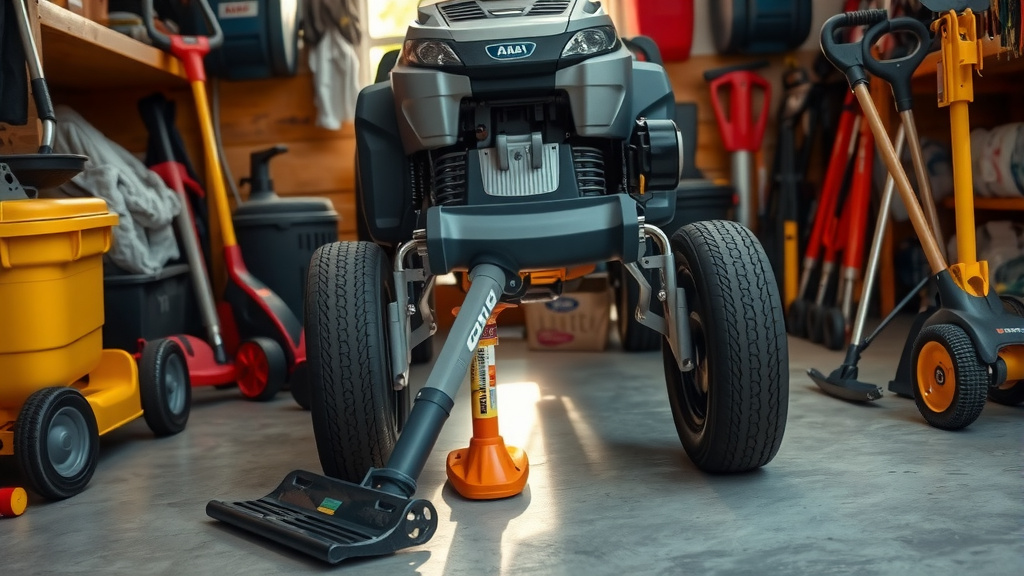
To safely jack a lawn mower up, you’ll need the right tools like a hydraulic jack, jack stands, or a dedicated mower lift, always ensuring the spark plug is disconnected and fuel tank is empty to prevent accidental starts or spills.
Prioritize safety by working on a level surface, blocking wheels, and securing the mower with jack stands once lifted, never relying solely on a jack for support.
- For quick fixes or blade changes, a simple tilt might work for push mowers, but always disconnect the spark plug.
- Riding mowers demand robust lifting equipment like a hydraulic jack, jack stands, or specialized mower lifts for stable support.
- Always empty the fuel tank and disconnect the spark plug before attempting to lift any lawn mower for your safety.
- Working on a flat, stable surface is non-negotiable to prevent tipping hazards.
- Never get under a mower supported only by a jack; always use secure jack stands or a dedicated lift.
How To Jack A Lawn Mower Up?
Lifting your lawn mower safely for maintenance or repairs requires careful preparation and the right tools. It’s about protecting both you and your machine.
Why Lift Your Lawn Mower? Safety First!
You might need to lift your mower for routine tasks. Think about sharpening blades or cleaning under the deck. It’s also important for inspecting parts underneath your machine. Doing this safely is the most important step.
Many experts emphasize that proper lifting prevents injuries. It also keeps your mower stable during work (OSHA guidelines suggest secure footing).
Understanding Your Mower’s Weight and Balance
Not all mowers are built the same. A push mower is very different from a riding mower. Their weight and balance points vary greatly. This impacts how you approach lifting them.
Push Mowers: Lighter Lifting
Push mowers are generally lighter. You might even tilt some models on their side. Still, safety measures are still essential. We found that forgetting safety steps can still lead to accidents.
Riding Mowers: Heavy Duty Considerations
Riding mowers are much heavier. They require substantial lifting equipment. You cannot simply tip these machines over. Proper jacking points are crucial for stability.
The Right Tools for the Job
Having the correct tools makes all the difference. Using improvised tools can be very dangerous. Invest in proper equipment for safety and ease.
| Lifting Tool | Best Use | Key Benefits | Considerations |
|---|---|---|---|
| Hydraulic Jack | Riding Mowers | Quick, high lifting capacity | Needs jack stands for support |
| Jack Stands | All Mowers (after lifting) | Essential for stable support | Must be placed on a firm surface |
| Mower Lift | Riding Mowers, Zero-Turns | Designed for mower chassis, very stable | Higher initial cost, takes up space |
| Wheel Ramps | Riding Mowers (front/rear access) | Simple, easy to drive onto | Only lifts one end, limited access |
Pre-Lifting Safety Checklist
Before you even think about lifting, there are vital steps. This checklist ensures you are ready. Skipping these steps could lead to serious issues.
- Disconnect the spark plug wire: This is perhaps the most critical step. It prevents any accidental engine starts, keeping your fingers safe.
- Empty the fuel tank or close the fuel valve: Fuel spills are hazardous. Reducing the fuel level prevents leaks when tilting.
- Clear the work area: Make sure there are no tripping hazards. A clean space is a safe space for your movement.
- Wear appropriate safety gear: Gloves and safety glasses protect your hands and eyes from debris.
- Chock the wheels: For riding mowers, if you’re only lifting one end, secure the wheels that remain on the ground.
- Work on a level, firm surface: An uneven surface increases the risk of tipping. A concrete driveway is ideal.
Step-by-Step: Lifting a Push Mower Safely
For smaller mowers, the process is simpler. Still, precision and caution are your best friends. Always confirm it’s safe to proceed.
First, complete your pre-lifting checklist. Then, firmly grasp the handle. Slowly tilt the mower backward until it rests on its handles and the rear wheels. The carburetor should always face upwards. This helps prevent oil from spilling into the air filter (many manufacturers suggest this for small engines).
Step-by-Step: Lifting a Riding Mower Safely
Riding mowers require more effort and equipment. Their weight demands a robust approach. You’ll typically use a hydraulic jack and jack stands.
Using a Hydraulic Jack and Jack Stands
Position your hydraulic jack under the mower’s frame. Look for a sturdy, load-bearing point. Many instruction manuals will specify these jack points.
Once lifted, slide jack stands into place. They should be directly under the frame. Lower the jack until the mower rests firmly on the stands. This setup offers maximum stability.
Working with Mower Lifts or Ramps
Mower lifts are specialized tools. They often allow you to drive the mower onto them. They then raise it hydraulically or mechanically. This provides a very stable platform. Wheel ramps are also an option. You drive the mower onto them. This lifts one end, giving you access to the blades or undercarriage.
Crucial Stability Checks After Lifting
After lifting, always perform a stability check. Gently push and pull on the mower. It should feel absolutely solid. Any wobble indicates a problem. You might need to adjust the jack stands. Ensuring proper weight distribution is key to safety.
Lowering Your Mower Safely
Lowering the mower is just as important as lifting it. Reverse your steps carefully. Remove tools from underneath the mower first.
Use your hydraulic jack to slightly raise the mower off the stands. Then, remove the jack stands. Slowly lower the mower to the ground. Maintain control of the descent at all times.
Common Mistakes to Avoid When Lifting
Mistakes can be very costly. One common error is using cinder blocks as support. They can crumble under pressure. Another is forgetting to disconnect the spark plug. This can cause accidental starts. Rushing the process is also a frequent mistake. Take your time for safety.
Conclusion
Lifting your lawn mower doesn’t have to be a daunting task. With the right tools, careful preparation, and a focus on safety, you can confidently perform maintenance and repairs. Always remember to disconnect the spark plug, empty the fuel, and use stable supports like jack stands or a dedicated mower lift. Your safety is always worth the extra few minutes of careful setup. Taking these steps ensures your projects go smoothly and safely, keeping your mower in top shape.
How high should I jack my mower for maintenance?
You should only jack your mower high enough to safely access the area you need to work on. Just a few inches off the ground is often sufficient for blade changes or deck cleaning. Over-lifting can make the mower less stable, increasing the risk of it tipping.
Can I use car ramps for a riding mower?
Yes, you can use heavy-duty car ramps for a riding mower, especially for accessing the front or rear end. Drive onto them slowly and carefully. Make sure the ramps are rated for the mower’s weight and that the wheels are chocked once it’s in place to prevent rolling.
What should I do if my mower starts to tip while I’m working on it?
If your mower starts to tip, immediately step back and get out of its path. Do not try to catch it or push it back into place, as this could cause serious injury. Once it has settled, assess the situation from a safe distance before approaching again to right it properly with help if needed.
How often do I need to lift my mower for maintenance?
The frequency of lifting your mower depends on its use and your maintenance schedule. Many experts suggest checking and sharpening blades at least once a season or every 25 hours of use. You might also lift it to clean the deck or inspect belts if you notice performance issues.
Are there any alternatives to jacking it up for simple tasks?
For very simple tasks like quickly scraping grass from under a push mower deck, you can sometimes carefully tilt the mower onto its back wheels with the carburetor facing up. However, always ensure the spark plug is disconnected and the fuel tank is nearly empty to prevent oil or fuel leaks. This method is not suitable for riding mowers or any task requiring you to get under the machine.
