
How To Load Lawn Mower In Truck?
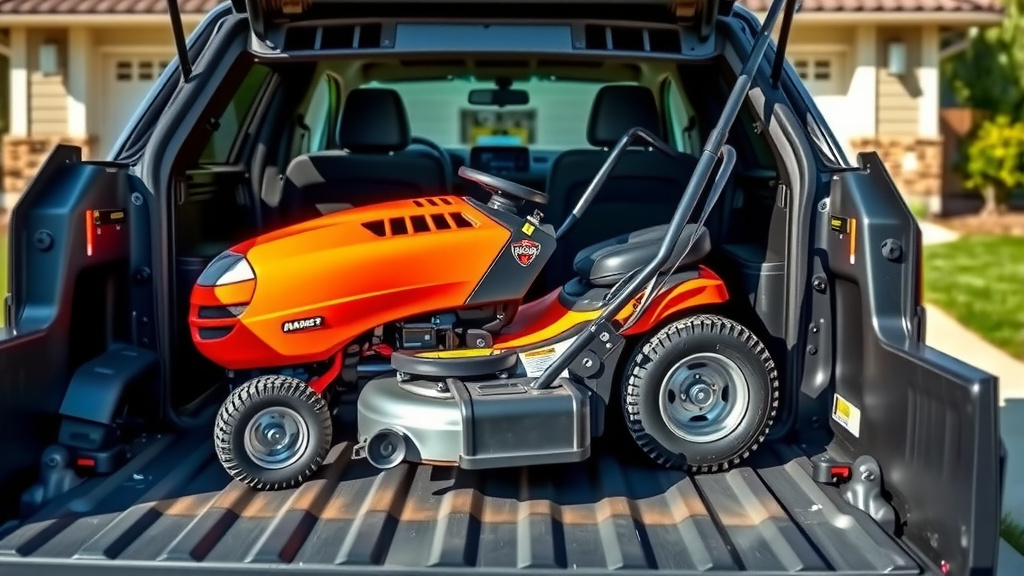
To load a lawn mower in a truck safely, always use sturdy ramps, drain the fuel and oil if transporting long distances, and secure the mower tightly to prevent movement.
Proper technique involves slowly driving or pushing the lawn mower up ramps with the engine off, ensuring the deck is stable, and securing it with straps inside the truck bed.
- Use robust ramps and get help to lift heavy mowers.
- Drain fuel and oil for long hauls to prevent spills and fire risks.
- Push or slowly drive the mower up ramps with extreme caution and a spotter.
- Always secure the mower tightly with strong straps at multiple anchor points in the truck bed.
- Prioritize safety: wear gloves, eye protection, and closed-toe shoes throughout the process.
How To Load Lawn Mower In Truck?
Loading a lawn mower into a truck might seem straightforward, but doing it correctly prevents accidents and damage. You need the right equipment and a clear plan to keep both yourself and your mower safe. Let’s walk through the steps together.
Why Proper Loading Matters for Your Mower
You wouldn’t want your mower tumbling around or worse, off the truck, would you? Proper loading protects your equipment from bumps and scratches. More importantly, it safeguards others on the road from loose cargo, which can lead to serious accidents. It’s all about being responsible and prepared.
Safety First: Your Essential Pre-Loading Checklist
Before you even think about moving that mower, let’s get you ready. Safety isn’t an option; it’s a must. Think of it like putting on your seatbelt before a drive.
Gathering Your Gear
You’ll need a few things to make this job easy and safe. First, gather your sturdy loading ramps. Make sure they can handle your mower’s weight. Next, grab some heavy-duty ratchet straps for securing the mower. Don’t forget your personal protective equipment: work gloves, eye protection, and closed-toe shoes.
Prepping Your Mower for the Ride
Before you load, prepare your mower. If you’re transporting it over a long distance, we found that draining the fuel tank and checking the oil level helps prevent spills. Many experts say disconnecting the spark plug is a vital step to prevent accidental engine starts during transport (Outdoor Power Equipment Institute recommendations). Also, clean any grass clippings or debris from the deck; it just makes things tidier and safer.
Choosing the Right Ramps for Your Setup
Your ramps are your bridge from the ground to your truck bed. Picking the right ones is super important for a smooth transition.
Types of Ramps: What Works Best?
You’ll typically find aluminum or steel ramps. Aluminum ramps are lighter and easier to move, which is a big plus for personal use. Steel ramps are often more affordable but heavier. We found that using purpose-built ramps significantly reduces the risk of accidents compared to makeshift solutions (NHTSA guidelines often suggest this). The key is choosing ramps with a weight capacity that exceeds your mower’s weight.
Here’s a quick look at ramp types:
| Ramp Type | Pros | Cons |
|---|---|---|
| Aluminum Ramps | Lightweight, rust-resistant, easy to handle. | Can be more expensive upfront. |
| Steel Ramps | Strong, durable, more affordable. | Heavy, can rust if not maintained, harder to move. |
| Arched Ramps | Better ground clearance for low-deck mowers. | Can be specialized and cost more. |
Ramp Safety: Angles and Placement
Place your ramps securely against the truck’s tailgate. Make sure they sit firmly on the ground. A general rule for ramp angle is that it shouldn’t be too steep. Some experts suggest aiming for a gentle incline, often achieved by parking the truck on a slight downhill slope or using longer ramps. Secure your ramps to the truck bed or tailgate with safety straps or pins to prevent them from slipping. This step is non-negotiable.
The Step-by-Step Guide: Loading Different Mower Types
The way you load depends a bit on your mower’s type. Let’s look at a few common scenarios.
Loading a Push Mower Safely
For a push mower, it’s often easiest to have a helper. You can push it forward up the ramps, or some find it easier to pull it backward with the engine off. If pushing forward, make sure you don’t accidentally hit the truck’s cab. Maintain a steady grip and pace. If you’re alone, pushing backward provides more control as the engine’s weight pulls down. Always be slow and deliberate.
Loading a Riding Mower: A Bit More Muscle
With a riding mower, you’ll drive it up the ramps. Start the mower, engage a low gear, and approach the ramps slowly and straight. Keep your hands firmly on the steering wheel. Once the front wheels are on the ramps, keep a steady pace until all four wheels are in the truck bed. Avoid sudden braking or accelerating. A spotter here can be incredibly helpful for guidance.
What About Zero-Turn Mowers?
Zero-turn mowers require a similar approach to riding mowers, but with extra care. Their steering is very responsive, so be extra gentle with the control levers. Maintain a low speed and a straight line up the ramps. It’s often recommended to load zero-turns with the engine end first if possible, as this places the heaviest part (the engine) over the ramps first, helping with stability.
Securing Your Lawn Mower for Transport
Once your mower is in the truck, your job isn’t done. Now you need to make sure it stays put, no matter how bumpy the road gets.
Anchor Points and Strap Choices
Find robust anchor points in your truck bed. These are usually D-rings or sturdy tie-downs. Use heavy-duty ratchet straps rather than flimsy bungee cords. Research often connects proper load securement with preventing highway hazards (Federal Motor Carrier Safety Administration reports). You’ll want at least four straps, one for each corner of your mower, creating an “X” pattern to pull the mower down and inward.
The “Wiggle Test”: Confirming Stability
After you’ve tightened all the straps, give your mower a good, firm shake. This is your “wiggle test.” If it moves, even slightly, tighten those straps more. You want the mower to feel like it’s part of the truck. Check the straps periodically during long drives, as they can sometimes loosen with vibrations.
Unloading Your Mower: Reversing the Process
Unloading is just as important as loading. It’s essentially the reverse, but still demands your full attention. Set up your ramps just as you did before. For a push mower, gently pull or push it down the ramps. For a riding mower, put it in a low reverse gear and slowly back it down. Take it easy, be patient, and keep your hands on the controls.
Common Mistakes to Avoid When Loading
We’ve talked about what to do, but knowing what not to do is just as important. Here are some common missteps you should really watch out for:
- Not securing ramps to the tailgate.
- Using worn-out or undersized ramps.
- Loading too quickly or without a spotter.
- Forgetting to drain fuel for long hauls.
- Using weak tie-downs or not enough straps.
- Leaving the spark plug connected on a push mower.
- Attempting to load a heavy mower alone.
When to Consider Professional Help
Sometimes, it’s just too much. If your mower is extra heavy, your truck is very high, or you don’t have the right equipment, it’s perfectly fine to call for help. Many landscaping supply stores or equipment rental places offer delivery or transport services. Think of it as investing in safety and peace of mind.
Conclusion
Loading a lawn mower into a truck doesn’t have to be a daunting task. By following these practical steps—from proper preparation and choosing the right ramps to careful loading and secure tie-downs—you ensure a safe journey for your equipment and everyone on the road. Remember, patience and attention to detail are your best tools here. Take your time, stay safe, and your lawn mower will be ready for action at its new destination.
How do I prevent gas from spilling when loading a lawn mower?
To prevent gas spills, it’s generally best to run the mower until the fuel tank is almost empty, or manually drain the fuel. Many experts suggest keeping the tank as dry as possible, especially for long-distance transport or if the mower will be on its side at an angle for an extended period. Also, ensure the fuel cap is tightly secured.
Can I load a lawn mower by myself?
You can load a push mower by yourself if it’s lightweight and you have sturdy, well-secured ramps. However, for heavier push mowers or any riding mower, it’s highly recommended to have a helper or spotter. This extra set of eyes and hands greatly improves safety and control during the loading process.
What kind of ramps are best for a riding lawn mower?
For a riding lawn mower, you’ll want sturdy, arched aluminum ramps with a high weight capacity that exceeds your mower’s weight. Arched ramps provide better clearance for the mower deck, preventing it from scraping the tailgate. Ensure the ramps are wide enough for your mower’s tires and have a secure attachment system to prevent slipping.
Should I remove the mower deck before loading?
You typically do not need to remove the mower deck for standard transport. However, if your mower has a very low deck and you’re concerned about clearance with straight ramps, or if you need to reduce the mower’s overall width for a very narrow truck bed, removing the deck might be a consideration. For most situations, it’s an unnecessary step.
How tight should I strap down my lawn mower?
Your lawn mower should be strapped down securely enough that it cannot shift or move at all within the truck bed. Use ratchet straps tightened until there is no slack, and the mower feels firmly anchored. Perform a “wiggle test” by trying to move the mower by hand. If it still moves, tighten the straps more. Be careful not to overtighten to the point of damaging the mower’s frame.
