Gas vs Electric Weed Eaters: Which Should You Choose? (November 2026)
Choose a gas weed eater for long, demanding work and an electric model for quieter, simpler trimming. Your yard size, access to power and tolerance for fuel care should guide the choice.
On this page (8 sections)
- Gas vs electric weed eaters: which is better for your yard?
- Which gas weed eater fits different workloads?
- Are electric weed eaters easier to use?
- Which type has the better runtime?
- Which is quieter and more neighbor-friendly?
- What maintenance does each type need?
- How should you choose between gas and electric?
- Final choice for gas vs electric weed eaters
Choose a gas weed eater for long, demanding work and an electric model for quieter, simpler trimming. In this gas vs electric weed eaters comparison, yard size, runtime, noise, maintenance and freedom of movement matter more than the power source alone.
Gas models use 2-cycle engines and carry their fuel with them. Electric models use a cord or batteries, so they are often easier to start and quieter, but reach depends on the outlet, cord or charge.
Your routine helps narrow the choice quickly. A large property with thick growth may justify fuel care, while a small garden near the house may suit an electric tool that is ready at short notice.
Runtime is the first practical difference. Gas can continue after a refill, a corded model can run while plugged in, and a cordless model stops when its battery needs charging.
Noise matters for many households. Gas engines add engine sound throughout the session, while electric models are often easier to use when neighbours are close by.
Weight and handling also shape the decision. Gas machines can feel steadier during heavy cutting but may tire your arms, whereas lighter electric models move more easily around beds, fences and paths.
Maintenance should fit the time you can spend. Gas requires fuel mixing, starting steps and engine checks, while electric models mainly need charging, cord care or battery storage.
If you need help with the basic tool category first, our guide explains what a weed trimmer is. The comparison below focuses on choosing between gas and electric models for common yard work.

Gas vs electric weed eaters: which is better for your yard?
Gas is usually the stronger choice for large areas and dense growth, while electric is easier for small yards and routine edging. The right match depends on how much vegetation you cut and how far you work from a power source.
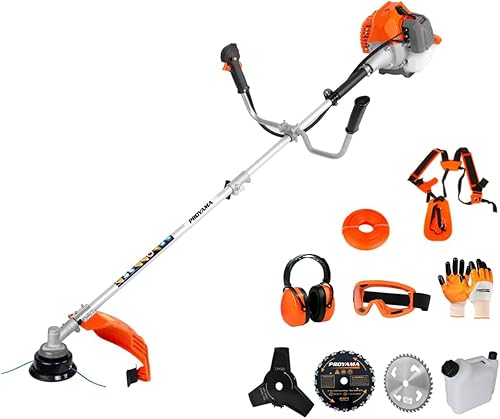
The PROYAMA 42.7cc model has a 2HP engine and an 18 in cutting width. Its trimmer head, 3T blade, 40T blade and chain blade give it more cutting options for grass, weeds, brush and small branches.
The PROYAMA 25.4cc model is a lighter gas option. Its 1.0HP engine, 17 in cutting width and 40-tooth alloy blade suit buyers who want gas-powered operation without choosing the larger 42.7cc machine.
Electric models are more focused. The BLACK+DECKER has a 6.5-amp motor, 14 in cutting width and a wheeled edger.
The cordless HortiHub has a 9000RPM cutting head, a 12 in cutting width and a 5.3 lb body for smaller trimming jobs.
Which gas weed eater fits different workloads?
Choose the 42.7cc PROYAMA for the heaviest work here, and choose the 25.4cc PROYAMA when lower weight matters more. Both are gas powered, but their engine sizes, weights and included cutting tools differ.
PROYAMA 42.7cc: best for large, rough areas
The 42.7cc engine is the largest in this comparison. That extra engine size makes sense when you expect longer sessions or heavier growth, especially because the machine includes a trimmer head, 3T blade, 40T blade and chain blade.
Its 19 lb weight is a trade-off. The shoulder straps, hip belt and U-shaped handle are designed to spread the load and help with control, but this is still a larger machine than a homeowner needs for occasional light edging.
The straight shaft gives reach around fences, trees and sidewalks. Use the correct attachment for the task, keep the cutting area clear and follow the starting and assembly instructions before working.
PROYAMA 25.4cc: best for lighter gas work
The 25.4cc, 1.0HP engine is smaller than the 42.7cc model, but the 17 in cutting path still covers a broad strip with each pass. Its 14 lb weight may be easier to carry when your work includes several areas around the property.
The tool-free line replacement design can shorten the interruption when you need more line. The 40-tooth alloy blade is intended for heavier clearing, but you still need to match the cutting tool to the material and work safely.
Choose this model when you want the freedom of gas power without the larger machine. Skip it if your main goal is quiet operation, low weight or minimal engine care.
Are electric weed eaters easier to use?
Electric weed eaters are usually easier to start, carry and store because they avoid gasoline handling. Corded and cordless models still have different limits, so electric does not mean one single type of experience.
A corded model can keep running while it has power. Compare corded electric string trimmers if you have a suitable outlet.
A cordless model removes the cord from the yard, but the work session depends on battery life and charging.
The BLACK+DECKER corded trimmer is the better fit when you have a suitable outlet and want a light tool for trimming and edging. The HortiHub is more mobile, but its battery runtime is the main limit.
BLACK+DECKER: best for corded edging
At 6.3 lb, this is much lighter than either gas model. The adjustable handle and height positions also help you set a more comfortable working position.
The 2-in-1 design switches between a string trimmer and a wheeled edger. That makes it useful around sidewalks, driveways and flower beds where a guided wheel can help keep the edge consistent.
The cord retention system helps prevent accidental cord disconnection. You still need to manage the extension cord carefully, keep it behind the cutting path and confirm that your outdoor outlet and cord are suitable for the work.
HortiHub: best for small yards
The HortiHub includes two 2.0Ah batteries and a charger. Its battery average life is 12 minutes, while its product information describes about 15 to 20 minutes of runtime per charge, so plan around short sessions and allow time for charging.
Its 12 in cutting width covers less ground per pass than the gas models or BLACK+DECKER. That smaller path is easier to control around garden edges, fences and trees, but it can mean more passes across a larger lawn.
The automatic line feed advances about 0.4 to 0.5 in when starting. Before first use, extend the line to 6 in, and stop the motor before making any line adjustment.
Which type has the better runtime?
Gas offers the most flexible continuous work for remote areas, while corded electric offers continuous operation near an outlet. Cordless electric is convenient, but its battery limits each session.
A gas trimmer can keep working after a fuel refill, provided you use the correct fuel mix and follow the starting procedure. That suits large properties where carrying a cord is impractical.
The 42.7cc PROYAMA uses a 40:1 fuel-to-oil ratio. Fuel preparation becomes part of ownership, and an engine that stalls or is difficult to start may need checks of warm-up, fuel filter, carburetor, tank vent and intake screws.
The cordless HortiHub is better for short touch-ups than a long clearing session. Keep both batteries charged, and divide the work into smaller areas if the full yard takes longer than one charge.
Which is quieter and more neighbor-friendly?
Electric weed eaters are the better choice when lower disturbance matters. The HortiHub has a reduced noise design for residential use, while gas engines create more sound during operation.
Noise also depends on the cutting attachment, grass thickness and your speed. A tool that feels acceptable in an open area may be more noticeable beside a boundary fence or shared driveway.
Electric does not mean silent. Cutting sound can still carry across a quiet street or garden, especially when the line strikes thick vegetation.
The corded BLACK+DECKER may suit routine edging if local rules allow it. At 6.3 lb it is light to carry between short stretches of border.
Its wheeled edger helps keep a steady line along sidewalks and driveways. A controlled pass can finish the work sooner and reduce the time neighbours hear the tool.
The HortiHub is the more mobile low noise option for small areas. Cordless movement avoids dragging a cord, although short battery sessions may require breaks for charging.
Timing matters as well as the tool. Trimming early in the morning or late in the evening can disturb people even with an electric model, so a mid morning slot may be more considerate.
Gas is harder to avoid when you need its reach and cutting strength. Both PROYAMA models use 2-cycle engines, and engine sound is part of normal operation.
For heavier clearing, that trade-off may be acceptable. A larger engine can work through thick grass and brush in fewer passes, so the session may be shorter even though the sound is greater.
Use hearing protection when appropriate and keep bystanders away. Eye protection and sturdy shoes also matter, because flying clippings and stones are a risk with any model.
Plan the noisiest work for a suitable hour. Save blade work and dense brush for later in the day, and keep routine line trimming brief when homes are close.
Check for open windows, pets or people resting nearby before you start. That simple check can prevent complaints and help you choose the right time.
Choose gas when cutting strength matters more than quiet operation. Choose electric when lower sound, lighter handling and simpler daily use are the priorities.
What maintenance does each type need?
Corded electric needs the least power-system care, cordless electric needs charging and battery storage, and gas needs fuel and engine care. All three still need line, guard and cutting-head checks.
Before any model, disconnect the power source. Unplug a corded trimmer, remove the battery from a cordless trimmer and follow the manual's shutdown steps for a gas machine.
Check the guard, shaft, handle and cutting head for damage. Clear wrapped grass only when the tool is stopped and disconnected from its power source.
Gas models need fresh, correctly mixed fuel and proper starting steps. The 25.4cc PROYAMA uses a 2-cycle engine, while the 42.7cc model also requires attention to its fuel ratio and engine components.
Electric models avoid carburetor and fuel-filter care. They still need clean air paths, an intact cord or battery connection and a line spool that feeds correctly.
For safe technique, follow our guide on how to use a weed trimmer. It covers body position, cutting direction and the basic habits that reduce avoidable debris and line problems.
How should you choose between gas and electric?
Pick gas when reach, runtime and heavy cutting come first. Pick electric when low weight, lower noise and simple upkeep matter more.
Choose the PROYAMA 42.7cc if you have large areas, dense growth or brush-clearing tasks. Its 18 in path and several cutting attachments give it the broadest role here.
Choose the PROYAMA 25.4cc if you want gas power in a lighter machine. Its 14 lb weight and 17 in cutting width offer a middle position between heavy gas work and small electric trimming.
Choose the BLACK+DECKER if your work is near an outlet and includes edging. Choose the HortiHub if your yard is small and cordless movement matters more than long runtime.
If you are comparing product names as well as power sources, our weed eater vs string trimmer guide explains why those terms often describe the same basic tool. For another cordless option, see Best Weed Eater Cordless.
Final choice for gas vs electric weed eaters
Gas is the better fit for large, rough or remote work, while electric is the better fit for lighter trimming close to home. Choose the 42.7cc PROYAMA for heavy tasks, the 25.4cc PROYAMA for lighter gas work, the BLACK+DECKER for corded edging and the HortiHub for small cordless yards.
The best weed eater is the one whose runtime, weight and care routine match your usual work. A powerful model is not right if its weight, fuel care or noise makes you avoid using it.
Choose the PROYAMA 42.7cc for large areas, dense growth or brush clearing. Its 42.7cc 2-cycle engine, 2HP output, 18 in cutting width, straight shaft, trimmer head, 3T blade, 40T blade and chain blade give it the broadest role here.
That choice has clear trade-offs. At 19 lb it is the heaviest model here, and it needs correct fuel mixing, starting steps and engine care.
The shoulder straps, hip belt and U-shaped handle help spread the load. They support control during longer work but do not make the machine light, so plan rest breaks on big jobs.
Choose the PROYAMA 25.4cc for gas power in a lighter machine. Its 25.4cc 2-cycle engine, 1.0HP output, 17 in cutting width and 14 lb weight sit between heavy gas work and small electric trimming.
Its 40-tooth alloy blade supports heavier grass, vines and brush. Tool-free line replacement also shortens the pause when you need to reload the trimmer head.
Choose the BLACK+DECKER if your work is near an outlet and includes edging. Its 6.5-amp motor, 14 in cutting width, 6.3 lb weight, automatic feed spool and wheeled edger suit borders, sidewalks, driveways and flower beds.
Manage the extension cord carefully. Keep it behind the cutting path, use the cord retention system and confirm that the outlet and cord suit outdoor use.
Choose the HortiHub if your yard is small and cordless movement matters more than long runtime. Its 5.3 lb body, 12 in cutting width, 9000RPM cutting head, automatic line feed, two 2.0Ah batteries and charger suit quick touch-ups.
Plan around short sessions and charging time. Divide larger areas into smaller sections, keep both batteries ready and extend the line to 6 in before first use.
For daily care, match the routine to the power source. Gas needs fuel and engine attention, corded electric needs cord and spool checks, and cordless electric needs battery storage and charging discipline.
If you also use powered cutting tools, our guide to gas chainsaws versus electric chainsaws explains the same fuel-versus-electric trade-off in another yard tool.
Frequently asked questions
Are gas or electric weed eaters better?
Gas weed eaters are better for long sessions, large yards and thick growth because they use fuel instead of a power cord or charged battery. Electric weed eaters are better for lighter trimming, lower noise and simpler care.
Choose based on yard size, vegetation and access to power.
Which lasts longer, gas or electric weed eaters?
Runtime depends on the model and work conditions. Gas models can keep working as long as you have the correct fuel, while cordless electric models stop when their batteries need charging.
Corded electric models can run continuously, but the cord limits where you can trim.
Are electric weed eaters powerful enough for thick grass?
Some electric weed eaters handle thick grass, but their practical range depends on the motor, battery or cord and cutting width. The 6.5-amp BLACK+DECKER is designed for tough weeds and overgrowth, while the 5.3 lb HortiHub is aimed at small yards and everyday garden areas.
Do gas weed eaters need more maintenance?
Gas weed eaters need fuel mixing, starting steps and engine care that corded electric models avoid. The PROYAMA 2-cycle models use a 40:1 fuel-to-oil ratio for the 42.7cc model, and routine care includes checking fuel, filters, vents and the cutting head.


