How to Use a Weed Trimmer
To use a weed trimmer, wear eye protection, inspect the area, hold the head level, and sweep the line through grass without forcing it. Trim tall growth in stages, then edge sidewalks with controlled passes.
On this page (10 sections)
- What should you do before using a weed trimmer?
- How do you hold a weed trimmer correctly?
- How do you trim grass around obstacles?
- How do you use a weed trimmer on tall grass?
- How do you use a weed trimmer as an edger?
- How do you manage line feed and cutting width?
- What should you do after trimming?
- What belongs in a yard-work safety setup?
- What mistakes should you avoid when using a weed trimmer?
- How do you choose the right trimming technique?
To use a weed trimmer, wear eye protection, clear the work area, hold the cutting head level, and sweep the line through grass with controlled passes. Trim tall growth in stages, keep the line away from people and hard surfaces, and stop the tool before making adjustments.
A weed trimmer is useful around fences, trees, beds, walls, and other places a mower cannot reach. If you are comparing tool names first, this guide to what is a weed trimmer explains how string trimmers and edgers fit together.
What should you do before using a weed trimmer?
Inspect the tool, wear protective gear, and remove hazards before starting. Check the cutting head, guard, line, battery or power connection, and controls according to the instructions.
Wear eye protection, long pants, sturdy closed-toe shoes, and hearing protection when the tool instructions recommend it. Keep children and pets away from the work area.
Walk the lawn and remove stones, sticks, wire, toys, and other loose objects. Mark sprinkler heads and avoid trimming near glass, cars, siding, and delicate plants until you know where debris will travel.
Choose a calm, dry time when the ground gives you secure footing. Wet grass can wrap around the head and make it harder to control the tool.
How do you hold a weed trimmer correctly?
Hold the trimmer with both hands, keep the head a safe distance from your body, and work with a balanced stance. Adjust the shaft or handle if the tool allows it so you can keep your back upright.
Keep the cutting head roughly parallel with the ground for ordinary trimming. Do not swing the tool above waist height, and never reach toward the head while the motor is running.
Use a comfortable stance with your feet apart. Move your upper body and arms as a unit rather than twisting sharply while the line is spinning.
Your goal is controlled contact between the line and grass. Forcing the head into thick growth can slow the tool, use more line, and increase the chance of wrapping.
How do you trim grass around obstacles?
Use the edge of the line's cutting circle and make slow passes around obstacles. Work around trees, fence posts, walls, and garden borders without letting the line strike hard surfaces.
Start several inches away from the obstacle, then move closer as you learn how quickly the grass cuts. Short passes give you more control than one deep swing.
Keep the guard and spacer in place if your model includes them. A spacer can help keep the line away from plants, ornaments, and other landscape features.
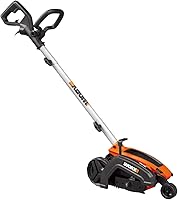
The WORX 20V 12" 2-in-1 Cordless String Trimmer has an adjustable spacer guard, a 12 in cutting diameter, a 90-degree tilting head, and support wheels for edging.
Its 5.5 lb machine weight may suit readers who want a lighter tool for routine trimming. The push-button command feed supplies line when you press the control, and its 7,600 rpm no-load speed is part of the stated design.
The tool includes a charger, trimmer spool, support wheels, and safety guard. Its 0.065 in line and 10 in cutting line length are details to check when replacing or maintaining the spool.
How do you use a weed trimmer on tall grass?
Cut tall grass from the top down in several passes instead of burying the head in one heavy section. Start with the upper growth, let the cut pieces fall, then lower the head for the remaining stems.
Use a shallow sweep and pause if grass begins wrapping around the head. Turn the tool off and disconnect its power before clearing wrapped material.
Avoid cutting more deeply than you can control. Tall weeds may hide stones, wire, or other objects, so reduce your speed as you approach an unfamiliar patch.
A weed eater and a string trimmer are usually names for the same kind of tool. This comparison of weed eater vs string trimmer explains the naming difference and the tasks these tools share.
How can you make straight trimming passes?
Make straight passes by keeping the head at a steady height and walking slowly along the edge. Overlap each pass slightly so small tufts do not remain between cuts.
Do not use the trimmer to level the entire lawn unless the tool instructions support that use. A mower is better for broad, even turf, while a trimmer handles borders and areas a mower misses.
Some Stihl models accept a blade; check which Stihl trimmers support blades.
For tall weeds, shorten the plants in stages. For thin grass, a light finishing pass is usually easier to control than repeated heavy contact.
How do you use a weed trimmer as an edger?
Turn the head or tool into its edging position, then guide it along the pavement with the line vertical. Follow the model's instructions for changing the position, and stop the motor before making the adjustment.
Move along sidewalks and driveways at a steady walking pace. Keep the line just outside the turf edge so you create a clean border without cutting into soil or pavement.
Use the wheels or guide features if your tool has them. They can help keep the edging path consistent, but you still need to watch for gravel, cracks, and nearby plants.
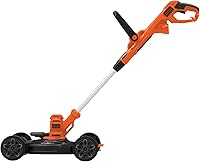
The BLACK+DECKER 20V MAX Weed Eater has a 10 in cutting width, automatic line feed, adjustable height and handle, and a trimmer head that rotates 180 degrees for edging.
This kit also includes a cordless sweeper for clearing hard surfaces after trimming. If you need one tool for both tasks, compare trimmer and edger combos.
The trimmer weighs 4.5 lb, while the sweeper weighs 3.7 lb, and both use the included 20V MAX lithium-ion batteries.
Choose this type of setup if trimming, edging, and light surface cleanup belong in the same yard routine. If you are deciding between fuel types, compare gas vs electric weed eaters before choosing a power system.
How do you manage line feed and cutting width?
Use the line-feed method designed for your trimmer and keep the cutting width within the tool's guard. Automatic and push-button systems reduce the need to stop and adjust line by hand, but they still need care.
Do not pull out extra line beyond the guard. Too much exposed line can strike nearby objects and may overload the cutting head.
When the line becomes short or uneven, stop the motor and follow the spool instructions. Use the correct line diameter for the tool instead of choosing by appearance alone.
A 10 in or 12 in cutting width affects how much grass you can reach in one pass. A wider path may cover open edges faster, while a narrower path can feel easier to control around plants and tight spaces.
What should you do after trimming?
Turn the tool off, disconnect its power, and inspect the head before storing it. Remove grass from the guard and head only after the line has stopped completely.
Wipe dirt from accessible surfaces with the method allowed by the instructions. Check for damaged guards, loose parts, worn line, or blocked vents before the next use.
If the head itself is cracked or no longer feeds line, compare replacement string trimmer heads.
Store batteries, chargers, and the trimmer in the conditions recommended by the manufacturer. Keep the cutting head protected from impact and do not leave loose line tangled around the tool.
After trimming, use a blower or sweeper only where it is safe to move the debris. Keep cut material away from drains, roads, windows, and other areas where it could create a hazard.
What belongs in a yard-work safety setup?
Your yard-work setup should focus on protective gear, clear footing, tool inspection, and safe debris control. A trimmer is for cutting vegetation, while unrelated outdoor equipment should stay separate from the trimming task.
The Gas One GS-3400P is a portable dual-fuel stove for butane or propane, not a weed-trimming tool. It uses a single 8 oz butane cartridge or a 16.4 oz propane cylinder, with fuel not included, and includes a propane converter regulator.
Keep any fuel-burning appliance away from dry grass, trimmer debris, fuel containers, and the cutting area. The stove has an adjustable heat dial, automatic piezo-electric ignition, a pressure sensor cartridge ejection system, and a gas flow cut-off mechanism for butane.
This product does not replace a trimmer or help cut grass. Treat it as separate outdoor equipment and follow its fuel and safety instructions.
What mistakes should you avoid when using a weed trimmer?
Avoid cutting wet grass, removing the guard, swinging above waist height, and clearing jams while the motor can start. These shortcuts reduce control and increase the chance of flying debris or contact with the line.
Do not use a trimmer near people, pets, windows, vehicles, or loose gravel without controlling the discharge area. Stop when visibility, footing, or weather changes.
Do not scalp the lawn by holding the head too low. Keep the line moving and use several light passes around thick growth.
Check a guide to the best weed eater on sale when you need to compare current options, and see Best Weed Eater Cordless for battery-focused choices. Readers working with dense growth can also compare What Is the Best String Trimmer for Tall Weeds? and best echo weed eaters.
How do you choose the right trimming technique?
Use level passes for grass, staged cuts for tall weeds, and a vertical head position for edging. The safest technique is the one that keeps the tool stable, the line controlled, and debris away from people and property.
Pick a lighter cordless trimmer if you value easy handling around beds and borders. Choose a model with edging features when sidewalks and driveways need regular cleanup, and compare cutting width with the size of your yard edges.
For every job, start slowly, watch the line path, and adjust only after the motor is off. That routine gives you cleaner cuts and fewer surprises.
Frequently asked questions
How do you use a weed trimmer for the first time?
Start by reading the tool instructions, charging or connecting the correct power source, wearing eye protection, and clearing stones, sticks, and toys from the area. Hold the trimmer with both hands, keep the head away from your legs, and use slow side-to-side passes through manageable grass.
Should a weed trimmer spin clockwise or counterclockwise?
Follow the rotation direction shown in the instructions because it affects where cut grass and debris are thrown. Keep people, pets, windows, vehicles, and walkways outside the discharge area, and stop the tool before checking the head or removing wrapped grass.
How short should you cut grass with a weed trimmer?
Cut only the grass that extends beyond the mower's reach or needs cleanup around obstacles. Keep the line head level and avoid scalping soil, because cutting too low can damage turf and leave an uneven edge.
Can you use a weed trimmer on wet grass?
Avoid trimming wet grass unless the tool instructions specifically allow it. Wet growth can clump around the head, make footing less secure, and reduce control.
Battery and electric tools also need protection from water according to their instructions.