
How To Make A Drag Lawn Mower?
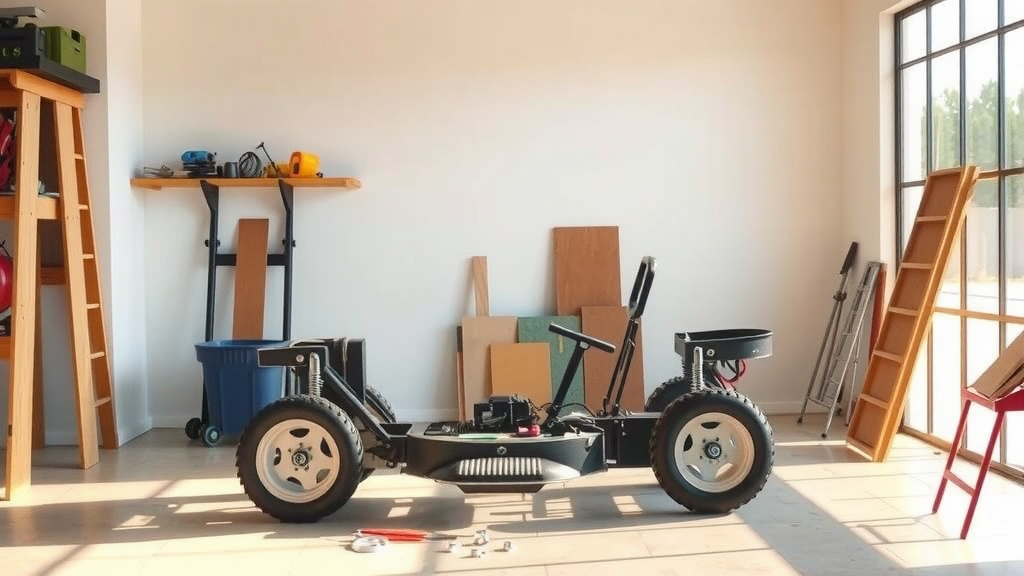
To make a drag lawn mower, you primarily need a sturdy frame, a reliable engine, and a durable mower deck designed to be pulled behind an ATV or tractor.
The core process involves securely mounting these components, ensuring proper blade engagement, and attaching a robust tow hitch for efficient remote mowing.
- You’ll need to build a strong frame to support all components.
- Mount a small engine and a cutting deck securely onto the frame.
- Connect the engine’s power to the blade system via a belt or direct drive.
- Add durable wheels and a reliable tow hitch for attachment.
- Always prioritize safety with guards and proper component selection for your DIY project.
How To Make A Drag Lawn Mower?
Making a drag lawn mower involves combining an engine, a cutting deck, and a custom frame to create a towable mowing unit for large areas.
It’s a practical project for tackling expansive lawns or fields where a traditional riding mower might not be ideal, giving you flexible mowing options.
Why Build Your Own Drag Mower?
Ever wish you could mow a huge field without sitting on a tractor for hours? A drag mower lets you do just that.
We found that building one offers a cost-effective solution compared to buying a specialized commercial unit. Plus, you get the satisfaction of creating something truly useful.
Many folks discover it’s perfect for areas with uneven terrain where a regular mower struggles (Agricultural Extension research).
Essential Components You’ll Need
Think of this as gathering your ingredients before baking a cake. Each part plays a vital role.
You’ll want to source quality materials to ensure your drag mower is both effective and built to last.
The Engine: Your Powerhouse
This is the heart of your drag mower, providing the muscle to spin the blades.
Many experts suggest a 5 to 10 horsepower engine for most backyard or small acreage needs, offering a good balance of power and fuel efficiency.
Consider a used engine from an old riding mower or tiller; it can be a great starting point.
The Mower Deck: The Cutting Heart
This is where the actual cutting magic happens. You’ll need a robust deck with sharp blades.
A discarded riding mower deck, cleaned up and reinforced, often works well.
We found that a deck around 30 to 48 inches wide strikes a good balance for efficiency without being too cumbersome.
The Frame: Foundation of Stability
The frame holds everything together, like the skeleton of your creation. It needs to be very strong.
Steel square tubing or angle iron are popular choices for their durability and ease of welding. Make sure it’s sturdy enough to handle vibrations and bumps.
Wheels and Axles: For Smooth Gliding
Your mower needs to roll easily behind your pulling vehicle. Sturdy wheels and a reliable axle are key.
Pneumatic tires, similar to those on a wheelbarrow or small trailer, usually provide the best shock absorption and traction.
Tow Hitch: Connecting to Your Vehicle
This simple part is how your ATV or tractor pulls the mower.
A standard trailer ball hitch or a pin hitch ensures a secure connection.
Safety Guards: Non-Negotiable
Safety first, always! You absolutely need guards around the blades and moving parts.
Heavy gauge sheet metal or expanded metal mesh can create effective barriers to protect against thrown debris.
Step-by-Step Guide to Building Your Drag Mower
Ready to get your hands dirty? This sequence will help you bring your drag mower to life.
Remember, patience and precision are your best tools here.
Step 1: Design and Plan Your Layout
Before cutting metal, sketch out your design. Consider the engine placement, deck height, and tow point.
A well-thought-out plan can save you headaches later on, as many experienced builders confirm.
Step 2: Assemble the Frame
Cut your steel tubing or angle iron to the planned dimensions. Weld the pieces together to form a strong, level frame.
Ensure the frame provides ample support for both the engine and the mower deck.
Step 3: Mount the Engine Securely
Place your engine on the frame in a position that allows for belt alignment with the mower deck pulley.
Bolt it down firmly, perhaps with rubber isolators to reduce vibration, as research suggests.
Step 4: Install the Mower Deck
Attach the mower deck beneath the frame. You’ll need a way to adjust its height for different cutting levels.
Many designs incorporate a simple lever or threaded rods for easy height changes.
Step 5: Connect the Drive System
This is where the engine power meets the blades. Typically, a belt drive system is used.
You’ll need pulleys on both the engine crankshaft and the mower deck spindle, connected by a tensioned V-belt.
Make sure the belt is sized correctly and has a tensioning mechanism for optimal power transfer.
| Drive System Component | Purpose | Key Consideration |
|---|---|---|
| Engine Pulley | Transfers power from engine. | Must match crankshaft size. |
| Deck Pulley | Receives power, spins blades. | Ratio affects blade speed. |
| V-Belt | Connects engine to deck. | Proper length and tension. |
| Tensioner | Keeps belt tight. | Spring-loaded or adjustable. |
Step 6: Add Wheels and Axle
Mount the axle to the frame and attach the wheels. Ensure the wheels are properly aligned to allow for straight towing.
Some builders add a swivel caster wheel at the front for better maneuverability.
Step 7: Attach the Tow Hitch
Weld or bolt your chosen tow hitch securely to the front of the frame.
It needs to be at a height that provides a level pull when connected to your ATV or tractor.
Step 8: Implement Safety Features
This step is critical. Never skip it. Make sure all moving parts are covered.
Here’s a quick safety checklist:
- Blade guards fully enclose the cutting area.
- Engine exhaust is directed away from the operator.
- Emergency stop switch for the engine is easily accessible.
- All wiring is insulated and secured.
- Moving belts and pulleys are shielded from accidental contact.
Important Safety Considerations
Working with spinning blades and engines means you must be careful. Always wear appropriate personal protective equipment.
We found that many accidents happen when people are complacent (OSHA guidelines highlight this).
Never operate your drag mower with people or pets nearby, and always inspect it before each use for loose parts or damage.
Common Challenges and Troubleshooting
Building something yourself can have its quirks. You might encounter a few bumps along the way.
Is the engine losing power? Check fuel, spark plug, and air filter. Are the blades not cutting evenly? The deck might be unlevel, or the blades could be dull.
Persistent vibration might point to an unbalanced blade or loose engine mounts.
Maintenance for Longevity
Just like any tool, your drag mower needs regular care to serve you well for years.
Many experts recommend checking engine oil, cleaning air filters, and inspecting blades after every few uses.
Lubricate moving parts, check belt tension, and tighten any loose bolts periodically for reliable operation.
Conclusion
Building your own drag lawn mower can be a truly rewarding project, offering a powerful and economical way to manage large areas of grass.
By carefully selecting your components and following a methodical build process, you can create a machine that meets your specific needs.
Remember to keep safety at the forefront of your design and operation, ensuring years of productive mowing for your property.
What kind of engine is best for a DIY drag mower?
A single-cylinder, air-cooled gasoline engine between 5 and 10 horsepower is generally ideal for a DIY drag mower. This range provides sufficient power for cutting most types of grass without being excessively heavy or complex.
Can I use an old riding mower deck for this project?
Yes, an old riding mower deck is often a perfect starting point. Just ensure it’s in good condition, free from major rust or damage, and that the spindles and blade system are functional. You’ll likely need to modify its mounting points to fit your custom frame.
How do I adjust the cutting height on a drag mower?
Cutting height on a drag mower can be adjusted in several ways. Common methods include using adjustable mounting brackets for the deck, a threaded rod system, or a simple lever mechanism that raises or lowers the deck relative to the wheels. Your design should account for this.
Is welding necessary to build a drag mower?
While welding provides the strongest and most durable joints for the frame, it isn’t strictly necessary if you lack welding skills. You can construct a frame using bolted connections with heavy-duty angle iron or channel steel, ensuring all bolts are robust and properly tightened with lock washers.
What safety gear should I wear when operating a drag mower?
When operating a drag mower, you should always wear eye protection (safety glasses or a face shield), hearing protection, heavy-duty gloves, long pants, and sturdy, closed-toe shoes or boots. This equipment protects you from thrown debris, loud noise, and potential contact with moving parts.
