
How To Mow A Lawn Diagonally?
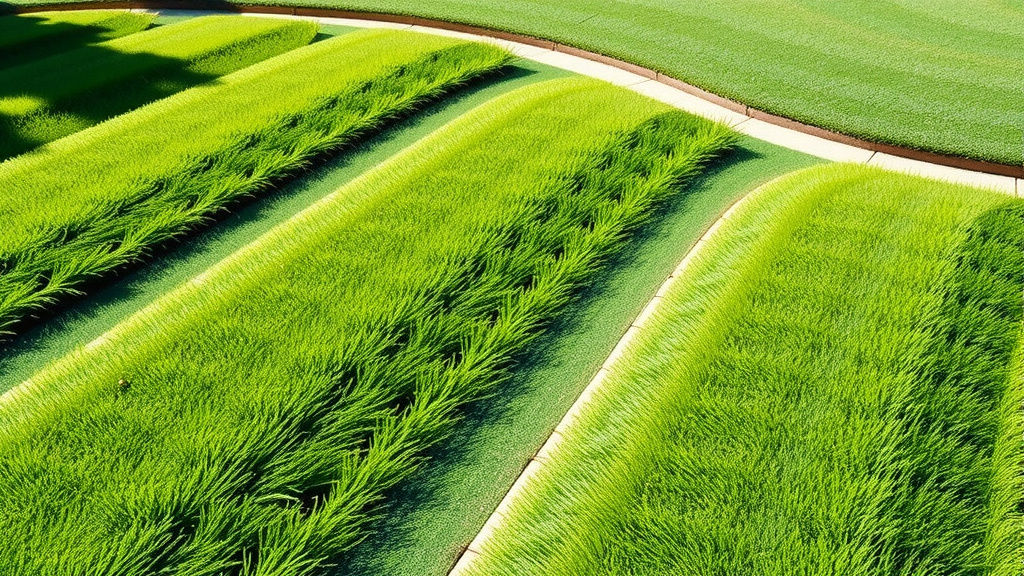
To mow a lawn diagonally, you begin by cutting the perimeter, then make your first diagonal pass across one corner of the lawn, ensuring a slight overlap with each subsequent strip as you work your way to the opposite corner.
This method creates attractive crosshatch patterns, promotes healthier grass growth, and distributes wear more evenly on your mower.
- Mowing diagonally creates eye-catching patterns and is great for grass health.
- Always prepare your lawn first by clearing debris and setting the correct blade height.
- Start with perimeter cuts, then make angled passes across the lawn.
- Overlap each pass slightly to avoid missed spots and ensure even cutting.
- Rotate your mowing pattern regularly to keep your lawn thriving.
How To Mow A Lawn Diagonally?
Mowing your lawn diagonally means cutting across the turf at an angle instead of in straight lines. This technique helps achieve a beautiful, professional-looking yard and offers practical benefits for your grass and equipment.
Why Go Diagonal with Your Mower?
You might wonder why you should bother with diagonal passes. It’s more than just a fancy look. There are real advantages for your lawn.
Better Lawn Health
When you mow in the same direction every time, you can push grass blades into a set pattern. Changing your mowing direction, like going diagonally, helps the grass stand up straighter. This encourages healthier, more robust growth and prevents matting.
Visual Appeal
Diagonal stripes give your lawn a distinct, manicured look. Many experts say it adds a professional touch, creating a striking visual pattern. It’s like giving your yard a little extra polish.
Even Wear on Your Mower
Repeatedly turning and pushing your mower in the same spots can create ruts. Mowing diagonally helps distribute the pressure and turns across different areas. This can lead to more even wear on your mower’s wheels and components, potentially extending its life.
Getting Your Lawn Ready for the Diagonal Cut
Before you even think about angling your mower, a little prep work goes a long way. This ensures a smooth cut and protects your equipment.
Clear the Deck
Walk your lawn and pick up any sticks, toys, or debris. Hitting an object can damage your mower blade or even cause injury. A clear path is a safe and efficient path.
Set the Right Blade Height
Never cut more than one-third of the grass blade’s height at once. For most grasses, a height of 2.5 to 3 inches is ideal (University of California Agriculture and Natural Resources). Adjust your mower deck to this appropriate height.
Sharpen Your Blades
Dull blades tear grass, leaving ragged edges that can turn brown. Sharp blades make a clean cut, which helps the grass heal faster. We found that sharp blades are essential for a pristine finish.
Step-by-Step Guide to Diagonal Mowing
Ready to try it? It’s simpler than you might think. Just follow these steps for a perfectly striped lawn.
The First Pass
Start by making one or two passes around the perimeter of your lawn. This creates a clean border and gives you room to turn. Then, choose a corner to begin your first diagonal strip. Aim your mower to cut across the entire length of the lawn at an angle.
Overlapping and Turning
As you reach the opposite side, turn your mower and line up for the next diagonal pass. Overlap your previous strip by about an inch or two. This prevents any missed patches and ensures an even cut. Think of it like painting a wall, with each stroke slightly covering the last.
The Return Trip
Continue making these diagonal passes, working your way across the entire lawn. When you finish one direction, you can then make a perpendicular diagonal pass. This creates a striking checkerboard or crosshatch pattern. Many people find this adds significant aesthetic value.
Perfecting Your Diagonal Stripes (Tips!)
Here are a few pointers we found to make your diagonal mowing even better.
- Vary Your Pattern: Don’t mow in the exact same diagonal direction every time. Change the angle slightly with each mow to prevent ruts and encourage even growth.
- Slow and Steady: A slower, consistent pace generally provides a cleaner cut than rushing.
- Clean Up Edges: Use a string trimmer or edger to tidy up any stray blades along borders and pathways after mowing.
- Watch the Weather: Avoid mowing wet grass. It clumps, can clog your mower, and leads to an uneven cut.
When Should You Mow Diagonally?
Diagonal mowing is a great technique to incorporate regularly. It’s particularly useful when you want to change your mowing pattern. Many experts suggest rotating your pattern each time you mow. This could mean straight lines one week, diagonals the next, and then horizontal lines.
Diagonal vs. Straight Lines: What’s the Difference?
Both methods have their place. Understanding the differences can help you decide what’s best for your lawn on any given day.
| Feature | Diagonal Mowing | Straight Line Mowing |
|---|---|---|
| Aesthetic | Creates striking crosshatch patterns | Classic, uniform stripes |
| Grass Health | Encourages upright growth, reduces matting | Can lead to grass leaning in one direction over time |
| Mower Wear | Distributes wear more evenly on wheels | Concentrates wear on turn points |
| Time/Effort | Slightly more attention to angle needed | Often feels faster due to linear movement |
| Best For | Adding visual interest, pattern rotation | Quick, efficient cuts when time is short |
Common Mistakes to Sidestep
Even seasoned lawn enthusiasts can make errors. Here are a few things to watch out for.
One common mistake is not overlapping enough. This leaves noticeable “tiger stripes” or uncut strips of grass. Always ensure a slight overlap for a uniform finish.
Another pitfall is mowing in the exact same diagonal pattern repeatedly. This can still lead to compaction or ruts over time. Remember to change your angles regularly.
Finally, trying to cut too much grass at once is a big no-no. This stresses the grass and your mower. Stick to the one-third rule for optimal results.
Your Diagonal Mowing Checklist
Keep this quick list handy as you head out to mow!
- Is the lawn clear of debris?
- Are your mower blades sharp?
- Is your mower deck set to the correct height?
- Have you mowed a perimeter strip first?
- Are you overlapping each pass by a couple of inches?
- Are you varying your diagonal pattern from last time?
Conclusion
Mowing your lawn diagonally is a simple yet effective way to transform its appearance and boost its health. It offers a fresh aesthetic with its attractive patterns and ensures more even wear for your lawn mower. By following a few straightforward steps and keeping an eye on common pitfalls, you can achieve a professional-looking yard that stands out. Remember, varying your mowing pattern, whether straight, horizontal, or diagonal, is key to a truly thriving lawn.
How often should I mow my lawn diagonally?
You don’t need to mow diagonally every single time. It’s best to rotate your mowing patterns. You could try diagonal one week, then straight lines the next, or even horizontal lines. This prevents compaction and encourages healthier grass growth.
Will mowing diagonally harm my lawn?
No, mowing diagonally will not harm your lawn. In fact, it’s beneficial because it helps grass blades stand upright, preventing them from leaning in one direction. This promotes more uniform growth and a healthier overall appearance.
Can I mow my lawn diagonally if it’s not perfectly square or rectangular?
Absolutely! You can still mow diagonally even if your lawn has an irregular shape. Start by making your perimeter cuts, then choose a corner or an edge to begin your diagonal passes. Adjust your turns and angles as needed to cover the entire area, maintaining the diagonal direction as much as possible.
What kind of mower is best for diagonal mowing?
Any type of lawn mower, whether it’s a walk-behind push mower, a self-propelled mower, or a riding mower, can be used for diagonal mowing. The key is to be comfortable with your equipment and to maintain a consistent speed for clean lines.
Does mowing diagonally take longer than mowing in straight lines?
Initially, it might feel like it takes a little longer because you’re focusing on maintaining the angle and making turns. However, with practice, the time difference becomes negligible. The added benefits of lawn health and visual appeal often outweigh any minor time increase.
