How to Use a Scotts Fertilizer Spreader
To use a Scotts fertilizer spreader, set the rate dial to the number on your product bag, fill the hopper, and push at a steady walking pace in straight, overlapping passes. Engage EdgeGuard near beds and driveways, and close the hopper fully before you turn.
On this page (9 sections)
- How to Use a Scotts Fertilizer Spreader: What Do You Set First?
- What Should You Check Before You Fill the Hopper?
- How Do You Fill a Scotts Broadcast Spreader Without Clumps?
- How Do You Walk in Even Passes With a Scotts Broadcast Spreader?
- What Rate Do You Use for Seed, Fertilizer, Salt, and Ice Melt?
- Which Spreader Fits a Larger Lawn Than the Scotts DLX Can Handle?
- When Is a Handheld Spreader Better Than a Push Model?
- How Do You Clean and Store a Scotts Spreader After Each Use?
- How Do You Know If Your Passes Were Even?
To use a Scotts fertilizer spreader, set the rate dial to the number on your product bag, fill the hopper, and push at a steady walking pace in straight, overlapping passes. Engage EdgeGuard near beds and driveways, and close the hopper fully before you turn.
That routine is the core of learning how to use a Scotts fertilizer spreader. Careful setup, clean passes, and short cleanup put product on the lawn, not on paths.
How to Use a Scotts Fertilizer Spreader: What Do You Set First?
Start with the rate dial, not the hopper. Turn it to the setting on the back of your Scotts product, then pour product in and start spreading.
Match the product, model, and lawn size. A bag may list different settings for small and large lawns, and seed or ice melt will use different numbers, so always read the bag you will apply.
Set the dial before you fill. Filling first can leave you spreading at the last job's setting.
Also check the EdgeGuard lever and hopper lid.
Our fertilizer spreader buying guide explains hopper size and pattern width. It also explains why the Scotts DLX holds up to 15,000 sq. ft. of Scotts product yet still needs refills on larger yards.
What Should You Check Before You Fill the Hopper?
Check the spreader before you add granules. Look for leftover fertilizer in the hopper, a clogged agitator, and a spread plate that sits flat and clean.
Damp residue can cake and change how material flows.
Make sure the hopper and agitator move smoothly. Scotts designed the DLX with a hopper and agitator for smooth product funneling and consistent coverage, but that design only works when parts are clean.
Brush out caked material and let rinse water dry.
Check wheels, handle, and EdgeGuard lever next. The DLX weighs 10.9 lb and measures 19 x 22 x 22 inches, so it is easy to push, but a wobbly wheel or stiff lever can ruin your pace.
Tighten or adjust anything that feels loose.
How Do You Fill a Scotts Broadcast Spreader Without Clumps?
Pour product in slowly and let it settle. The curved hopper and dual-bladed agitator help granules funnel smoothly, but fast pouring can pack fine material at the bottom.
Keep product dry from the start. Work on a dry day when possible, and store bags off the ground with tops sealed.
Wet granules clump and come out in bursts instead of an even stream.
Use only as much as you plan to cover in one fill. The DLX holds up to 15,000 sq. ft. of Scotts product, which suits many suburban lawns.
Do not mix damp leftover product with new product. Finish the old bag first at the correct setting, or discard material that has turned to mush.
Plan refill points in advance on larger lawns.
How Do You Walk in Even Passes With a Scotts Broadcast Spreader?
Walk at a steady, normal pace and keep the same speed on every pass. Speed changes the amount of product per square foot, even when the dial setting stays the same.
Think of your pace as part of the setting.
Use straight lines with a slight overlap. For model-specific drop-spreader steps, see Scotts drop spreader guide.
Plan lines before opening the hopper, walk the full length, then turn with the hopper closed.
Close it before every turn.
Start each new pass where the last pass ended, with a small overlap at the edge. Gaps show up later as pale stripes, while heavy overlaps can burn grass or waste product.
Mark lines with a garden hose or chalk if passes drift.
Keep eyes a few steps ahead, not down at the hopper. Looking ahead helps hold a straight line and steady pace.
Look down only to check that product is flowing.
How Do You Use EdgeGuard Near Flower Beds and Driveways?
Engage EdgeGuard when one side of your pass runs along a bed, driveway, or sidewalk. For other model options, compare broadcast fertilizer spreaders.
Scotts says EdgeGuard blocks the right side of the spreader pattern to keep product off non-lawn areas.
Set the lever before opening the hopper.
Plan your route so the blocked side faces the edge for the whole pass. That may mean walking the edge pass first, then working across the open lawn.
Do not swing the spreader around mid pass to fix direction.
Do not rely on EdgeGuard at the far end of a pass. Close the hopper before you reach the end, turn, and reopen only when lined up again.
Most waste happens in those last few feet.
What Rate Do You Use for Seed, Fertilizer, Salt, and Ice Melt?
Use a different rate for each material, even in the same spreader. Scotts says the DLX can apply fertilizer, grass seed, granular weed killer, salt, and ice melt, but each bag prints its own setting.
For liquid treatments, see garden pump sprayer instructions.
The spreader does not know what you poured in.
Read the bag every time you switch products. A setting right for lawn food can be far too heavy for seed, and salt rates differ again.
Turn the dial to the new number before refilling.
Note the setting you used and the date. A short note on the bag or in your phone helps repeat a good result next season.
It also helps spot the problem if a strip looks thin or heavy.
For small or patchy areas, a handheld unit can give more control. Our guide to the best handheld lawn spreader covers models that suit spot seeding, small beds, and winter salt on steps.
How Do You Spread Seed Differently From Fertilizer?
Seed usually needs a lighter, more even dusting than fertilizer, and the bag setting reflects that. Set the dial for seed, walk the same steady passes, and resist adding extra by hand over thin spots.
A second light pass at half rate can work better than one heavy pass.
Keep seed in contact with soil where the product calls for it. Light raking or watering after seeding follows many seed bags, but follow instructions on your specific product.
The spreader only places seed.
Which Spreader Fits a Larger Lawn Than the Scotts DLX Can Handle?
A push spreader is not always the right tool. If your lawn is closer to half an acre, refilling a 15,000 sq. ft. hopper every few passes gets old fast.
That is when a tow behind model starts to make sense.
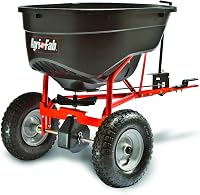
The Agri-Fab pull behind spreader carries 130 lb and covers up to 25,000 sq ft, or about half an acre, with one fill. Its universal hitch connects to most riding mowers and lawn tractors, and its spread width runs 10 to 12 ft, so you cover more ground per pass.
Before using one, follow tow-behind spreader steps.
Steel tubing, an enclosed gear house, and 13 in pneumatic tires suit repeated seasonal use on bigger properties. The trade-off is storage space and the need for a riding mower or tractor to pull it.
If you use a UTV instead of a tractor, check our best broadcast spreader for UTV guide before you order. Hitch type and spread width matter more on a UTV than on a lawn tractor.
When Is a Handheld Spreader Better Than a Push Model?
A handheld spreader wins for small areas, tight corners, and single beds. It also wins in winter, when you need salt on a walkway or steps and do not want a full broadcast spreader for a thin strip.
The Yhtpouqe handheld spreader holds up to 80 oz, weighs 1.17 lb, and has three adjustable opening sizes. You rotate the lid for small, medium, or large openings to match salt, seed, sand, or fertilizer particle size.
Its ergonomic handle and screw top help keep steady flow without wrist strain or spills. It even comes with a scoop and a pair of garden gloves for filling.
If your whole lawn is small, a handheld model may be all you need. Our post on What Is the Best Fertilizer Spreader for Small Lawns? compares small yard options, including when a push model is still worth it.
How Do You Clean and Store a Scotts Spreader After Each Use?
Empty leftover product back into a sealed bag or container. Do not leave granules in the hopper, since some fertilizers absorb moisture and can cake around the agitator.
Label the bag with the product and rate.
Brush out the hopper and spread plate, and rinse only if needed, then dry fully. A damp hopper invites clumps on your next job.
Store the spreader upright in a dry spot, indoors or in a shed. Keep it away from leaking bags of salt or fertilizer, and check wheels and lever while storing.
For a wider view of models and deals, see Best Fertilizer Spreader Deals and our look at the best fertilizer spreader with pneumatic tires for rough ground.
How Do You Know If Your Passes Were Even?
Look for stripes within a day or two, before rain or mowing hides them. Thin pale lines mean a gap or speed change.
Dark green or scorched lines mean an overlap or slow spot.
Water or mow lightly to even out a light application, and avoid adding more product right away. A second full pass at the correct rate is safer than spot correction.
Compare How to Use a Broadcast Spreader Evenly? for a deeper walk through of pace, overlap, and turning. That guide pairs well with the Scotts steps here.
Walk the lawn after you finish and sweep up granules that landed on paths or patios. Remember the simple order: read the bag, set the dial, fill gently, walk steady, close the hopper at turns, and clean up after.
Frequently asked questions
What setting should I use on a Scotts spreader?
Use the number printed on the back of your Scotts product bag for your spreader model and lawn size. Turn the rate dial to that number before filling the hopper.
If the bag lists a different setting for a different Scotts model, use the one that matches your DLX spreader.
How do I keep fertilizer off my driveway and flower beds?
Engage EdgeGuard on the Scotts DLX so the right side of the pattern is blocked near edges. Walk straight passes that keep the blocked side toward driveways, walks, and beds.
Skip the edge strip by hand if needed, so product lands only on grass.
Can I use a Scotts broadcast spreader for seed and ice melt?
Yes, Scotts says the DLX can spread fertilizer, grass seed, salt, and ice melt. Always check the setting on the bag for the material you are using, since seed and salt need different rates.
Pour material in gently so granules do not bridge or clump in the hopper.
How do I store a broadcast spreader after use?
Empty leftover granules back into a sealed bag, brush or rinse the hopper dry, and store it in a dry spot. Keep the rate dial and agitator free of damp fertilizer, which can cake and change the flow.
Check wheels and the spread plate before your next pass.