
Is It Dangerous to Mow a Steep Hill?
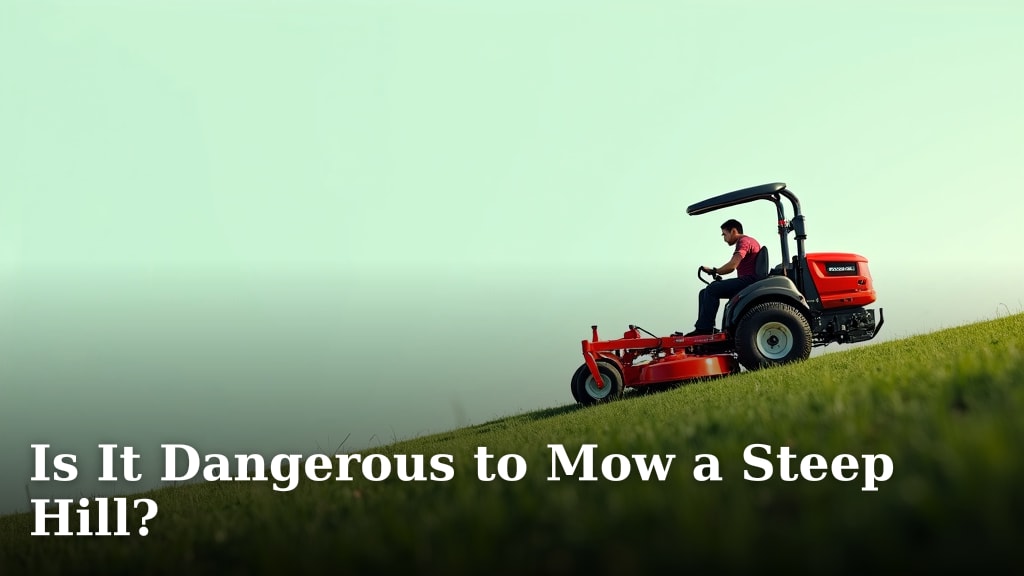
Mowing a steep hill can be very dangerous, and it’s generally not recommended. The primary risk is that your mower could lose traction and slide or tip over, leading to serious injury. Safety should always be your top priority.
While some might think it’s just another lawn chore, steep slopes present unique challenges that standard mowing techniques can’t safely handle. You’re dealing with gravity, unstable footing, and the sheer weight of the equipment, all of which increase the potential for accidents.
- Mowing steep hills is risky.
- The biggest danger is the mower sliding or tipping.
- This can lead to severe injuries.
- It’s often best to find safer alternatives.
Let’s talk about why it’s so hazardous and what safer options you have for tackling those challenging slopes.
Why Mowing Steep Hills is a Risky Proposition
Mowing a steep hill might seem like just another lawn chore, but it’s a situation where you’re seriously flirting with danger. Gravity is not your friend on a slope, and that’s putting it mildly. Many lawn care experts and safety organizations strongly advise against it, and for good reason.
The fundamental issue is control. When you’re on a slope, your mower can easily lose traction. This is especially true if the grass is wet or has accumulated debris. A loss of traction can cause the mower to slide sideways or, worse, tip over. When a heavy piece of machinery tips on a slope, it can roll downhill quickly, taking you with it.
The Terrors of Traction and Tipping
Let’s break down why traction is such a big deal. Mowers are designed to work on relatively flat surfaces. Their wheels, especially on push mowers, don’t have the aggressive tread needed to grip a steep incline. Riding mowers can be even more precarious. If the front wheels lose grip, the mower can slide down. If the rear wheels lose grip, the mower can spin or even flip backward.
Tipping is another major concern. Most lawn mowers are wider than they are tall, making them inherently unstable on angles. When a mower tips, especially a riding mower, the operator can be pinned underneath it. This can lead to severe injuries, including broken bones, crushing injuries, and even fatalities.
The Physics of a Slide
Think about it: when you’re on a slope, you’re constantly fighting gravity. Your mower, which is quite heavy, is also fighting it. If the tires can’t get enough grip, the mower’s weight will pull it downhill. It doesn’t take much of a slide for things to go very wrong. A small slip can quickly turn into a runaway situation, especially if the mower is moving.
The Danger of Rollovers
For riding mowers, rollovers are a primary concern. If you’re mowing across a slope and one side goes higher than the other, the mower can tip. The center of gravity shifts, and the machine can become unstable. Many riding mowers are not designed to be righted easily if they tip on a slope, and the blades can continue to spin, posing an extreme hazard.
Understanding the Types of Mowers and Their Risks
The type of mower you’re using makes a big difference in the level of risk. Some are inherently more dangerous on hills than others.
Push Mowers on Slopes
Push mowers might seem less risky because you’re not sitting on them. However, they still pose significant dangers. You could lose your footing and fall while trying to push or pull the mower. If the mower slides away from you, you might chase after it, increasing your risk of injury. Pushing a heavy mower uphill requires significant physical exertion, which can lead to strain or a fall. Many experts recommend avoiding slopes with a grade greater than 10-15% even with a push mower (CDC). For slopes, consider a specialized push mower designed for inclines.
Riding Mowers and Zero-Turn Mowers
Riding mowers and, especially, zero-turn mowers are particularly dangerous on steep inclines. Their higher center of gravity makes them prone to tipping. Zero-turn mowers, with their agile steering, can be even more unpredictable on uneven or sloped terrain. They can turn so sharply that they can cause themselves to roll over if not handled with extreme caution or if the operator makes a sudden, sharp turn on a slope.
Many riding mower manuals explicitly state not to mow on slopes exceeding a certain degree, often around 15 degrees. Exceeding these manufacturer guidelines is a recipe for disaster. You might think your mower can handle it, but the forces at play are greater than you might realize.
What Constitutes a “Steep” Hill?
It can be tricky to judge just how steep a hill is. What looks manageable can quickly become a hazard. A general rule of thumb is to consider any slope that makes it difficult for you to walk up or down without struggling as potentially too steep to mow.
Here’s a simple way to think about it: if you were to stand on the slope, could you maintain your balance easily? If you find yourself leaning heavily forward or backward, or if you need to use your hands for support, it’s likely too steep for mowing. Many safety guidelines suggest that slopes steeper than 15 degrees should be avoided for mowing (OSHA).
A Simple Gradient Test
While not everyone has a protractor in their gardening shed, you can get a feel for steepness. Imagine a standard piece of paper. If you hold it at an angle, and it feels like a mower would slide off easily, that’s a good indicator of danger. A 10% slope means for every 10 feet of horizontal distance, there is a 1-foot rise or fall. For a 15% slope, it’s a 1.5-foot rise or fall over 10 feet.
Beyond the Mower: Other Dangers to Consider
The risks aren’t just about the mower itself. Your own safety is also on the line.
Operator Injury and Falls
Even if the mower doesn’t tip, you can easily lose your footing. Trying to maintain balance while pushing a mower uphill or preventing it from sliding downhill can lead to stumbles and falls. These falls can result in sprains, fractures, or head injuries, especially if you fall in a way that brings the mower down on top of you.
Debris and Uneven Terrain
Steep hills are often home to hidden hazards. Rocks, roots, holes, and slippery patches of grass can be easily missed. A mower hitting an obstruction can jolt suddenly, throwing you off balance. Worse, the mower could be thrown off course, potentially leading to an accident.
Throwing Hazards
Mowers can pick up and throw objects like stones, sticks, or pieces of metal at high speeds. On a slope, this risk is amplified. If the mower hits an object at an angle, it could send the projectile in an unpredictable direction, potentially hitting you or someone nearby.
When the Answer is “No”: Safer Alternatives for Steep Slopes
So, if mowing is too dangerous, what can you do? Fortunately, there are several effective and much safer alternatives for managing grass on steep hills.
Consider Professional Landscaping Services
Hiring a professional landscaping company is often the most straightforward solution. They have specialized equipment and the training to handle difficult terrain safely. They can assess the slope and use appropriate methods to keep it maintained. Hiring a professional landscaping company is often the most straightforward solution.
Use Different Types of Equipment
There’s equipment designed for slopes that might be more suitable than your standard mower.
- String Trimmers (Weed Eaters): For smaller slopes or trimming edges, a powerful string trimmer can be effective. Some have harnesses to distribute weight better, making them more comfortable for longer use.
- Pole Saws or Extendable Trimmers: These can reach areas without you needing to stand directly on the steepest part.
- Robotic Mowers: For certain types of slopes, a robotic mower could be an option, though you’ll need to check its specific slope-handling capabilities.
- Walk-Behind Mowers with Enhanced Traction: Some heavy-duty walk-behind mowers are designed with better traction for inclines, but still require caution.
Manual or Alternative Landscaping Methods
Sometimes, you need to rethink the landscaping itself.
- Retaining Walls: Building retaining walls can break up a steep slope into several smaller, more manageable terraces.
- Ground Cover Plants: Planting hardy ground cover species can help stabilize the soil and reduce the need for mowing altogether.
- Gravel or Mulch: In some areas, replacing grass with gravel or mulch can be a low-maintenance solution.
Mowing Technique: If You *Must* Mow (Use Extreme Caution!)
If you absolutely must attempt to mow a slope and have determined it is within safe limits (i.e., not too steep), there are techniques that can help mitigate risk. However, remember that even with these, safety is never guaranteed.
The consensus among safety experts is to mow **up and down** the slope, not across it.
- Never mow across a slope. If the mower slides sideways, it can easily tip or get away from you.
- Mow up and down. This allows the mower’s wheels to provide better traction and control. You are essentially fighting gravity directly, rather than at an angle.
- For riding mowers, always keep the slope to your front or back. Never turn the mower sideways on a slope. If you need to turn, go to a flatter area if possible, or make the turn very slowly and deliberately.
- Maintain a firm grip. Keep both hands on the mower handles at all times.
- Wear sturdy footwear. Good traction on your shoes is essential.
A quick checklist to help you decide if it’s too steep:
- Can you walk up and down the slope without slipping or needing to brace yourself?
- Does the slope feel significantly angled, even when standing still?
- Are there many hidden rocks, roots, or uneven spots?
- Is the grass wet or slippery?
- Is the mower designed for slopes, or is it a standard model?
If you answered “yes” to any of these questions, it’s probably too steep to mow safely.
Conclusion
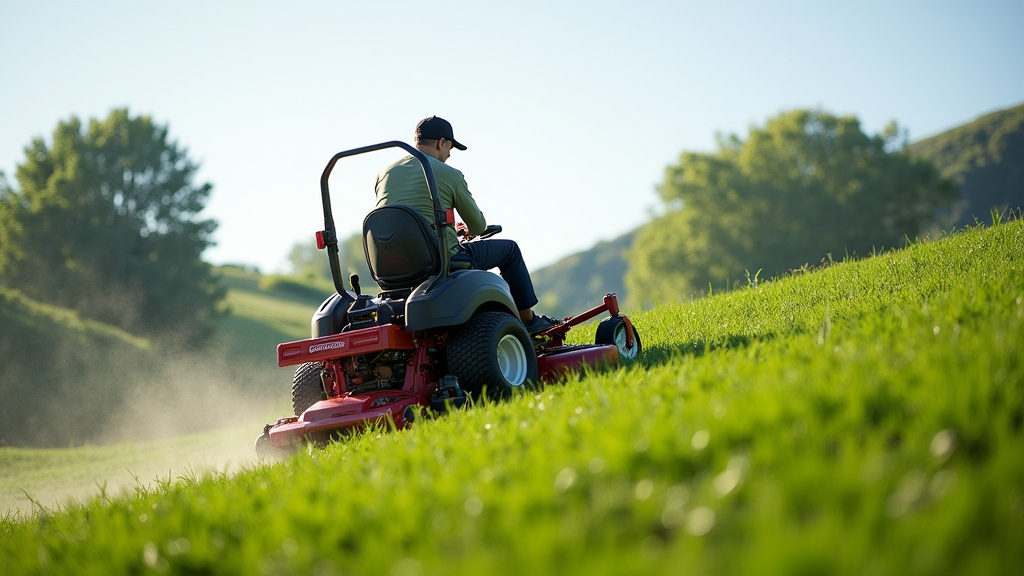
Mowing a steep hill presents real dangers you shouldn’t ignore. Losing traction and having your mower slide or tip over can lead to serious injuries. Your safety is always the top priority, so it’s best to avoid mowing steep slopes altogether.
If you have challenging inclines, look into safer methods. Consider hiring professionals, using specialized equipment like string trimmers, or even rethinking your landscaping with ground cover or retaining walls. Always assess the slope’s steepness and your mower’s capabilities before even thinking about mowing.
Frequently Asked Questions
What’s the maximum slope I can safely mow?
Most safety guidelines suggest avoiding slopes steeper than 15 degrees. If you find it difficult to walk up or down the hill without losing your balance, it’s likely too steep to mow. Always check your mower’s owner manual for specific recommendations.
Is it safer to mow up and down or across a steep hill?
You should always mow **up and down** the slope, never across it. Mowing up and down provides better traction and control. Mowing across the slope greatly increases the risk of the mower sliding sideways or tipping over.
Can I use a riding mower on a hill?
Riding mowers, especially zero-turn models, are particularly risky on steep hills due to their higher center of gravity. Many manufacturers advise against mowing on slopes exceeding 15 degrees. Turning on a slope can easily cause a rollover.
What if my lawn has roots or rocks on a slope?
Roots, rocks, and uneven terrain on a slope add extra danger. Hitting an obstruction can jolt your mower unexpectedly, throwing you off balance. This makes maintaining control much harder and increases the risk of an accident.
What are some alternatives to mowing a steep hill myself?
For steep hills, consider hiring professional landscapers who have the right equipment and expertise. You could also use tools like string trimmers or extendable trimmers, or change your landscaping to include ground cover plants or retaining walls to reduce the need for mowing.
