What Is a Hover Mower?
A hover mower is a lightweight mower that floats on a cushion of air while its blade cuts grass. It can turn easily on slopes and uneven ground, but it may be harder to control on long, wet, or rough grass.
On this page (8 sections)
A hover mower is a lightweight mower that floats on a cushion of air while a rotating blade cuts the grass. It is easy to turn and can work well on small slopes, banks, and uneven areas, but it has practical limits with traction, long grass, wet conditions, and control.
The floating action comes from air pushed beneath the mower deck. That air lifts the machine slightly, reducing the contact between the mower and the lawn.
This design changes how the mower feels in use. Instead of rolling on wheels, you guide a deck that hovers just above the surface.
That can make tight turns and awkward corners easier to manage.
It also means the mower relies less on wheel grip for movement. On short, dry grass this can feel smooth and light.
On long, wet, or rough grass, the same floating action can make the machine harder to keep moving in the direction you want.
A hover mower is therefore best seen as a specialist option. It suits people who want to work around banks, bumps, and small areas where turning matters.
It is less suited to large open lawns where straight lines and steady traction matter more.
Weight still matters, even though the mower floats. You must hold it steady, start and stop it safely, and keep your footing secure on any slope.
The air cushion helps with movement, but it does not remove the need for care.
Think about your lawn before choosing one. If it is small, uneven, and often dry, a hover mower may be a practical fit.
If it is large, wet, or covered in long grass, a wheeled mower may give you more control.
How does a hover mower work?
A hover mower uses a fan effect beneath the deck to create an air cushion. The blade spins inside the deck, while the reduced contact lets you move the mower from side to side with little rolling resistance.
Unlike a standard push mower, it may not need large wheels to support its weight during cutting. The result is a mower that can pivot quickly and move across awkward sections of lawn.
The air cushion doesn't make the mower weightless. You still need to guide it, keep the blade away from people and objects, and maintain stable footing.
That guidance takes practice, especially on slopes. Small steering movements can change the direction of the deck, so slow and steady handling helps.
You also need to watch the height of the grass, as thick growth can make the mower harder to control.
Check the ground before you start and clear it of stones, sticks, and toys. Work carefully near edges and keep other people and pets well clear while the blade is turning.
Are hover mowers any good?
Hover mowers are good for small lawns, slopes, banks, and areas where turning space is limited. Their main advantage is easy movement across irregular ground, not maximum cutting power or long mowing sessions.
They can be a poor fit for large open lawns because floating models may be less predictable in a straight line. They may also lack the traction, collection capacity, and wheel-based height control found on conventional mowers.
For a broader comparison, read How To Choose The Right Lawn Mower?. Your lawn size, slope, grass type, storage space, and preferred cutting method all affect the choice.
What lawns suit a hover mower?
A hover mower suits small, uneven, sloped, or banked lawns where a wheeled mower feels awkward. It can move across changes in direction without the repeated wheel turns needed by a conventional push mower.
Use extra care on steep slopes. The machine may float across the surface, but your shoes still need reliable grip, and the mower can slide if the ground is slick.
A hover mower may also help around trees, curved borders, and tight corners. Measure the area and consider how far you need to carry the mower between storage and the lawn.
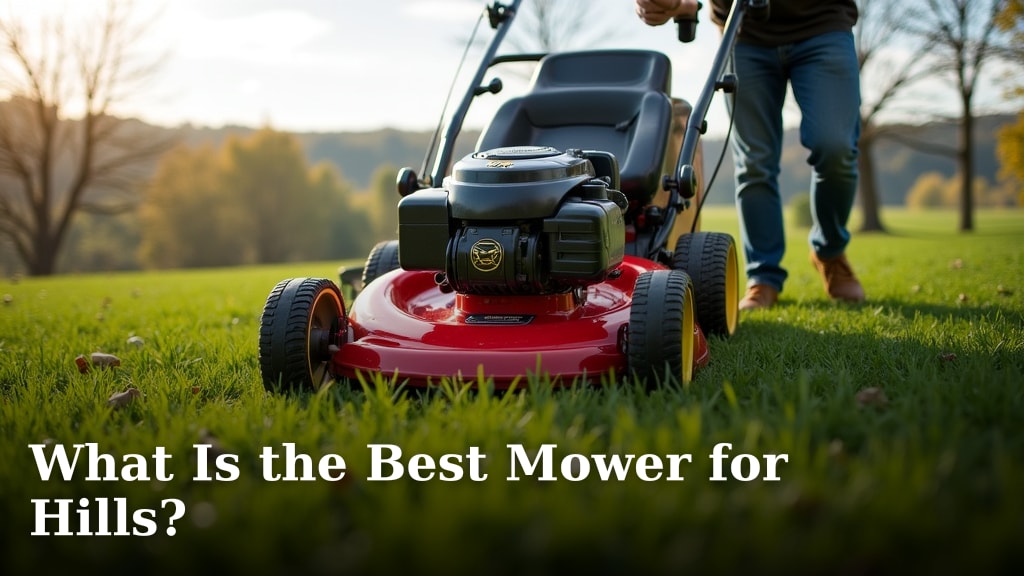
For steeper ground, compare the factors in What Is the Best Mower for Hills?. A wheeled model with larger rear wheels may give you more predictable traction where control matters most.
Can a hover mower handle long or wet grass?
Hover mowers are easiest to guide through short, dry grass. Long or wet grass can increase resistance at the blade, reduce the quality of the cut, and make the machine more difficult to control.
Mow more often when the grass is growing quickly. If the lawn is already overgrown, raise the cutting height if the mower allows it and work slowly according to the manual.
Don't force the mower through dense patches. Clear branches, stones, toys, and other objects before starting, then keep people and pets away from the cutting area.
What are the main handling limits?
The biggest hover mower limitation is reduced traction compared with a mower that stays firmly on its wheels. The air cushion helps movement, but it doesn't provide the same grip when you push across a slope or stop on slippery ground.
Direction changes can feel different from a wheeled mower. Use controlled movements and avoid standing below the mower on a slope where it could slide toward you.
Hover mowers may also be less convenient when you need to carry clippings. If collecting grass is important, check whether the model supports a collection system before choosing it.
People who prefer wheel-based control can compare a best high wheel mower for lawns where obstacle clearance and steady rolling matter more than floating movement.
How should you use a hover mower safely?
Inspect the lawn, wear suitable footwear, and follow the mower manual before cutting. Keep your hands and feet away from the blade area, and disconnect the power source before clearing a blockage or cleaning beneath the deck.
Start on level ground while you learn how the mower responds. Practice turning without making sudden movements, especially near edges, drop-offs, ponds, or retaining walls.
On a slope, work across the face only when the manual permits it and your footing remains secure. Never mow where you cannot control the machine or safely stop it.
Keep the underside clear of packed grass. Switch off and disconnect the mower first, then use the cleaning method approved for that model.
For general mower handling advice, see How To Choose A Good Lawn Mower?. A mower that suits your physical control and storage setup is more useful than one chosen only for its cutting width.
Do replacement wheels help with a hover mower?
Replacement wheels generally apply to conventional push, riding, or deck mowers, not to the floating base of a hover mower. Before buying a wheel, identify whether your mower actually uses wheels for support, steering, or deck height.
A replacement wheel must match the axle, hub, bore, width, and mower design. A wheel that looks close may still be unsafe or unusable if those measurements differ.
The AR-PRO 15x6.00-6 Lawn Mower Tire and Wheel includes 2 complete 15x6.00-6 tubeless tire and wheel assemblies, a 3-inch centered hub, 3/4-inch bushings, and six 0.1-inch metal washers. Its 4-ply rubber construction, turf tread, and stated 500 lb capacity per tire suit compatible riding mowers and lawn tractors that use the same fit.
The CheeMuii 2PCS 8" Lawn Mower Wheels Kit includes 2 8-inch wheels, 2 bolts, 2 gaskets, and 2 lock nuts. The PVC plastic wheels are 1-3/4 inches wide, with a 1/2-inch bore and mixed-pattern tread.
The XaXmTee 4PCS M111489 Lawn Mower Deck Wheels includes 4 deck wheels made from polypropylene. Each wheel has a 5-inch diameter, a 2-inch height, a 5/8-inch bore, a 1-1/2-inch hub, and a smooth tread.
Check your mower's part number and measure the existing wheel before ordering. If you own a conventional mower rather than a hover mower, Is The DeWalt Lawn Mower Any Good? offers another example of how mower type affects the buying decision.
How do hover mowers compare with wheeled mowers?
Choose a hover mower for easy turning on small, awkward, or sloped areas. Choose a wheeled mower for stronger traction, more predictable straight-line control, or easier height adjustment.
A hover mower can be easier to move around curved borders and banks. A wheeled mower may be easier to push in a straight line and can offer more stable contact with the ground.
The right choice also depends on storage and transport. A lightweight hover mower may be easier to carry, while a wheeled mower may stand or roll more conveniently in a shed.
Before deciding, think about the actual work:
- Pick a hover mower for small banks, uneven ground, and tight turns.
- Pick a wheeled mower for open lawns, longer mowing runs, and stronger ground contact.
- Avoid either type if the slope is unsafe or you cannot keep stable footing.
- Choose replacement wheels only after confirming the exact fit.
If you are comparing a compact personal mower, read How To Use Lawn Mower 2.0? for basic handling ideas that also apply to safe mower setup and movement.
Is a hover mower right for your lawn?
A hover mower is a practical choice when easy turning matters more than traction and collection. It works best on short, dry grass in small or uneven areas where a wheeled mower is awkward.
Choose a hover mower if you can keep firm footing and don't need to push through wet, tall, or dense grass. Choose a conventional mower if you need steady wheel contact, long straight passes, or a grass collection system.
Replacement wheel products help only with compatible wheeled machines. For a true hover mower, focus on safe slope limits, blade access, cleaning, storage, and the conditions where you plan to cut.
Frequently asked questions
Are hover mowers any good?
Hover mowers can be useful on small, sloped, uneven, or awkward lawns because they move on a cushion of air and turn easily. They are less suitable when you need strong traction, a large grass bag, a long straight cut, or easy control through tall and wet grass.
Can a hover mower cut hills?
A hover mower can suit some slopes because it has no normal drive wheels to steer around the lawn. However, the floating base can still slide, so use it only where you can keep firm footing and follow the mower's safety instructions.
Do hover mowers have wheels?
Many hover mowers do not rely on wheels during cutting because airflow lifts the deck slightly above the grass. Other mower types use wheels for height control and traction, so replacement wheel parts are only useful when they match a compatible conventional mower.
What grass is best for a hover mower?
Short, reasonably dry grass is usually the easiest condition for a hover mower. Long, thick, wet, or heavily overgrown grass can make the mower harder to guide and may reduce the quality of the cut, so clear obstacles and follow the manual.