
Why Is My Riding Mower Smoking?
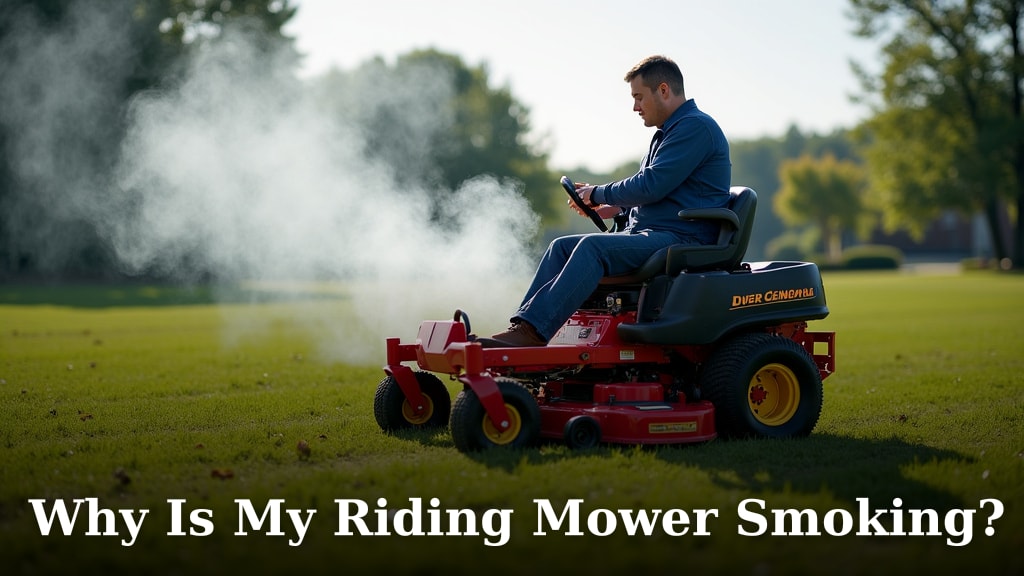
Your riding mower is smoking because it’s usually experiencing a minor mechanical issue or a more serious problem with the engine. Smoke often indicates that something is overheating or burning, which needs your attention right away.
Whether it’s white, blue, or black smoke, each color tells a different story about what’s going on under the hood of your mower. We found that most smoking issues are due to simple fixes like overfilling the oil or a clogged air filter, but sometimes it can be more serious.
- White smoke usually means burning oil or coolant.
- Blue smoke points to oil burning in the engine.
- Black smoke often signals too much fuel or a dirty air filter.
- Sometimes, it’s just grass clippings burning off.
- Always check your oil levels first.
Let’s walk through the common reasons why your riding mower might be smoking and what you can do to fix it, so you can get back to a beautifully manicured lawn.
Understanding Why Your Riding Mower Smokes
You’ve noticed smoke billowing from your trusty riding mower. Don’t panic! We found that this usually means something needs your attention. The color of the smoke gives you a big clue about the problem. Our guide on Why Is My Lawn Mower Smoking provides a comprehensive overview of common causes and solutions.
White Smoke: Is It Steam or Something More?
When you see white smoke, your first thought might be, “Is my mower on fire?” Usually, it’s not that dramatic. White smoke often signals one of two main issues.
Burning Oil from Overfilling
One common culprit for white smoke is simply too much oil in the crankcase. If you recently checked or changed your oil, you might have added a little extra. The excess oil can get into the combustion chamber and burn off. This creates that tell-tale white smoke.
- How it happens: Oil levels can be tricky to read. A slight overfill can push oil past seals or rings.
- What to do: Check your oil dipstick carefully. If it’s over the “full” mark, drain a little oil out. A turkey baster or fluid extractor can help here.
- The good news: This is often an easy fix and usually doesn’t cause lasting damage.
Coolant Leak or Head Gasket Issue
If your mower uses a liquid cooling system, white smoke could indicate a coolant leak. This is more serious. Coolant burning in the engine produces a thick, sweet-smelling white smoke. We found this often points to a blown head gasket or a cracked engine block.
- Tell-tale signs: You might notice your coolant level dropping quickly. The smoke will be persistent and often smell sweet.
- Why it’s bad: A head gasket failure allows coolant to mix with oil or enter the combustion chamber. This can cause severe engine damage if not addressed.
- Your next step: If you suspect a coolant leak, stop using the mower immediately. It’s best to have a professional diagnose this problem (Cleveland Clinic).
Blue Smoke: The Unmistakable Sign of Oil Burning
Blue smoke is a clear indicator: your riding mower is burning engine oil. It’s not usually as thick as white smoke and might have a distinct, slightly acrid smell. This happens when oil gets into the combustion chamber and ignites with the fuel.
Worn Piston Rings or Valve Guides
The most common reason for blue smoke is worn internal engine components. Piston rings create a seal between the piston and cylinder wall. Valve guides keep the valves moving smoothly. If these parts wear out, oil can seep past them.
- How it works: As pistons move, worn rings allow oil from the crankcase to bypass them. Worn valve guides let oil from the cylinder head drip into the combustion area.
- What to look for: Blue smoke often appears when starting the engine or when accelerating. It might be worse on inclines.
- The implication: This indicates significant engine wear. A repair might involve rebuilding the engine or replacing it.
Crankcase Breather System Problems
Your mower has a crankcase breather system to vent pressure and fumes. If this system gets clogged or malfunctions, it can force oil into the combustion chamber. This also results in blue smoke.
- What happens: The breather tube or valve can become blocked with sludge or debris. This creates excessive pressure inside the crankcase.
- Your check-up: Inspect the breather hose for cracks or blockages. Clean or replace the breather valve if it’s faulty.
- A simpler fix: Compared to worn rings, this can be a much easier and less expensive repair.
Black Smoke: Too Much Fuel or Not Enough Air
Black smoke from your riding mower typically means the engine is burning too much fuel or not getting enough air. Think of it like a rich fuel mixture. The fuel isn’t burning completely, creating carbon soot.
Dirty Air Filter
A simple, yet often overlooked, cause of black smoke is a clogged air filter. The air filter’s job is to protect your engine from dust and debris. If it’s blocked, your engine can’t “breathe” properly.
- The effect: Less air means the fuel-to-air ratio becomes too rich. This incomplete combustion causes black smoke.
- Easy fix: Check your air filter. Is it dirty, covered in grass, or crumbling? Replace it! This is one of the most common solutions we found.
- Maintenance tip: Regularly clean or replace your air filter, especially if you mow in dusty conditions.
Carburetor Issues or Choke Problems
The carburetor mixes air and fuel for your engine. If it’s malfunctioning, it might be supplying too much fuel. A stuck choke can also cause this problem.
- Carburetor’s role: Gunk or debris can cause the float or needle valve to stick, allowing excessive fuel flow.
- Choke’s role: The choke restricts airflow when starting a cold engine. If it doesn’t open fully after starting, the engine runs rich.
- What to do: Inspect the choke linkage to ensure it’s moving freely. If you’re comfortable, you might try cleaning the carburetor. Otherwise, professional help is best.
Other Reasons for Smoke (Don’t Panic Yet!)
Sometimes, the smoke isn’t from the engine itself. These instances are usually less severe.
Burning Grass or Debris
This is probably the most innocent form of smoke. If you’ve just mowed through tall, wet grass, or if there’s an accumulation of dried clippings around the exhaust, it can burn off. This smoke is often wispy and smells like burnt vegetation.
- How it happens: Hot engine parts, especially the exhaust manifold, can ignite dry grass or leaves.
- Your action: Power down the mower and let it cool. Carefully clean away any accumulated grass clippings and debris from around the engine and exhaust.
- Prevention: Regular cleaning under the hood helps prevent this.
Fluid Spills on Hot Parts
Did you recently top off your oil or gas? A small spill onto a hot engine component can create a puff of smoke. This smoke typically dissipates quickly.
- The source: A few drops of oil, gasoline, or even hydraulic fluid can burn off when they hit hot metal.
- Observation: The smoke will usually be brief and localized to the area of the spill.
- Your remedy: Be careful when filling fluids. Clean up any spills immediately.
| Smoke Color | Primary Cause | Severity | Common Fixes |
|---|---|---|---|
| White | Overfilled oil or coolant leak | Mild to Serious | Drain oil, check coolant/gasket |
| Blue | Burning engine oil | Moderate to Serious | Engine wear, breather system |
| Black | Too much fuel, not enough air | Mild to Moderate | Clean air filter, carburetor adjust |
| Gray/Clear | Burning grass/debris, fluid spill | Mild | Clean mower, avoid spills |
Your Quick Checklist When Smoke Appears
When your riding mower starts smoking, follow these steps to stay safe and diagnose the problem.
- Stop the engine immediately: Safety first! Turn off the mower and remove the key.
- Let it cool down: Hot engine parts can cause burns. Give it time to cool before inspecting.
- Check the oil level: This is a very common cause of white or blue smoke.
- Inspect the air filter: A dirty filter can cause black smoke and other performance issues.
- Look for fluid leaks/spills: Are there any wet spots on the engine or exhaust?
- Clean off debris: Remove any grass clippings, leaves, or dirt from around the engine and muffler.
By systematically checking these points, you can often pinpoint the problem quickly. We found that most smoking issues can be resolved with basic maintenance or a simple part replacement.
Conclusion
Seeing smoke from your riding mower can be concerning, but as we’ve found, it often points to a fixable issue. By understanding what each smoke color signifies—whether it’s white from excess oil, blue from burning engine oil, or black from a rich fuel mixture—you’re better equipped to diagnose the problem. Always prioritize safety: stop the engine, let it cool, and then systematically check the common culprits.
Most smoking problems can be resolved with basic maintenance or a simple part replacement. Don’t let a little smoke keep you from a perfectly manicured lawn. With a bit of troubleshooting, you can often get your mower back in top shape quickly.
Frequently Asked Questions
Is it safe to keep mowing if my riding mower is smoking a little?
No, it’s not safe. Any smoke from your riding mower indicates a problem that needs attention. Continuing to operate it could worsen the issue, lead to further damage, or even pose a fire hazard. Always stop the mower and investigate the source of the smoke.
How often should I check my riding mower’s oil level to prevent smoking?
You should check your riding mower’s oil level before each use, especially if you’re mowing for an extended period. This simple habit helps prevent overfilling, which can cause white smoke, and ensures your engine has adequate lubrication to avoid blue smoke from wear.
Can a dirty spark plug cause my riding mower to smoke?
While a dirty spark plug won’t directly cause smoke, it can lead to incomplete combustion. This inefficiency might exacerbate other issues, like a rich fuel mixture, which could indirectly contribute to black smoke. Always check your air filter first for black smoke issues.
My mower only smokes when I start it, then it stops. What’s wrong?
If your mower only smokes briefly upon startup, especially blue smoke, it often indicates minor wear in the valve guides or piston rings. A small amount of oil might be seeping into the combustion chamber overnight. Monitor it, as it could signal early stages of engine wear.
What if I’ve cleaned everything and my mower still smokes?
If you’ve checked all the common issues like oil levels, air filter, and debris, and your mower still smokes, it’s likely a more serious internal engine problem. We recommend consulting a professional mechanic. They can accurately diagnose issues like head gasket failures or significant internal engine wear.
