
How To Build A Off Road Lawn Mower?
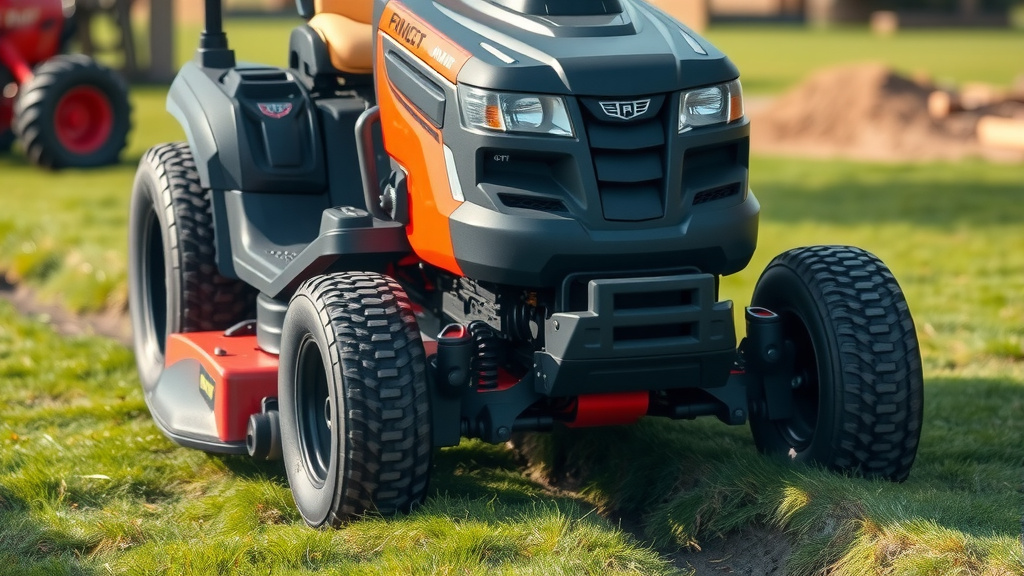
Building an off-road lawn mower involves modifying a standard riding mower with enhanced traction, ground clearance, and a more robust frame to handle rough terrain. You’ll focus on boosting its durability and performance beyond typical yard work.
This exciting project transforms your mower into a versatile machine capable of tackling uneven fields, steep slopes, and dense brush with greater ease and safety. It’s about adapting for tougher outdoor challenges.
Here’s a quick overview of what you’ll find in this guide:
- Understand the core components needed for an off-road conversion.
- Learn practical steps for modifying your mower’s chassis and suspension.
- Discover how to boost engine power and improve safety features.
- Get tips on selecting the right tires for superior traction on varied terrains.
- Prepare for common challenges and find reliable solutions for your build.
Thinking about transforming your regular riding mower into a beast that can conquer overgrown fields or uneven property? It’s a fantastic idea! A standard lawn mower works great on flat, manicured lawns. But when you face rocky patches, muddy spots, or steep inclines, they often struggle. That’s where an off-road mower comes into play. You’re not just cutting grass; you’re navigating tough environments.
This project is more than just a simple adjustment. It calls for some mechanical know-how and a willingness to get your hands dirty. We’re going to walk through the process, step by step. We’ll explore what makes an off-road mower tick and how you can achieve that rugged performance yourself. Ready to get started?
How To Build A Off Road Lawn Mower?
Building an off-road lawn mower typically means strengthening its frame, increasing ground clearance, and installing larger, aggressive tires to improve traction and stability on varied, unpaved surfaces. It prepares your machine for tasks beyond typical landscaping.
You might be asking, “Where do I even begin?” The journey starts with a good donor mower. Many experts suggest choosing a riding lawn mower with a solid steel frame. Avoid those with flimsy, stamped metal frames, as they won’t withstand the rigors of off-road use. A used older model often provides a stronger foundation for modifications. Remember, safety always comes first.
Assessing Your Base Mower
Before any wrench-turning begins, you need to thoroughly inspect your current mower. What kind of engine does it have? Is the deck in good shape? How about the transmission? These components form the heart of your future off-road machine. You want a mower that is mechanically sound. This saves you from headaches down the road. Check for rust on the frame too. A rusty frame needs extra attention or replacement parts.
Choosing the Right Donor Mower
We found that models with a strong engine and a durable hydrostatic transmission are often preferred. A V-twin engine offers more power, which is great for pushing through thick brush. Older garden tractors often make excellent candidates because they were built with heavier-duty components from the start. They often have better axles and bigger wheel hubs, too.
Core Components for the Off-Road Build
What makes an off-road mower different? It’s all about specific upgrades. You’ll need bigger tires, a lifted suspension, and possibly some engine tweaks. These changes work together to create a machine capable of tackling rough terrain. Think of it like building a monster truck, but for your yard work.
- Aggressive Tires: Look for ATV or tractor tires with deep treads.
- Suspension Lift Kit: Essential for increasing ground clearance.
- Engine Upgrades: Consider carb adjustments or exhaust mods for more power.
- Heavy-Duty Axles: Stock axles might not handle the new stresses.
- Reinforced Frame: Welding additional supports can prevent bending.
Tires: Your Off-Road Grip
Your tires are the first point of contact with challenging ground. Standard lawn mower tires are smooth and designed for turf. For off-road, you need grip. Many experts recommend ATV tires or agricultural lug tires. These have deep, open treads that dig into mud, dirt, and loose gravel. We found that larger diameter tires also help with ground clearance. Don’t forget to match the bolt pattern on your wheels. You might need adapters. Sometimes, new wheels are simply easier.
Suspension and Ground Clearance
Imagine hitting a small ditch with your standard mower. You’d likely bottom out. Off-road mowers need more space between the frame and the ground. This is achieved through a lift kit. You can fabricate simple spacers for the suspension or adapt existing off-road vehicle lift components. Research shows that proper ground clearance prevents damage to the mower’s underbelly (NIH). This also allows for those larger tires you want to install.
Frame Reinforcement and Stability
An off-road mower takes a beating. The frame needs to be able to handle it. Welding additional steel plates to stress points is a common practice. This adds rigidity and prevents the frame from twisting or breaking under heavy loads or impacts. Think of it as giving your mower a stronger skeleton. Stability also means a wider stance. Many builders widen the axle for a better footprint on slopes.
Here’s a quick checklist for strengthening your frame:
- Inspect the original frame for weak spots or cracks.
- Weld gussets or cross-members at critical joints.
- Consider adding a brush guard or bumper for front protection.
- Ensure all bolts are heavy-duty and properly tightened.
- Test the frame’s integrity after modifications.
Engine Performance Boosts
More power means less bogging down in thick grass or uphill climbs. You don’t always need a whole new engine. Sometimes, simple tweaks make a difference. Many builders find that a new air filter, a modified exhaust system, or even adjusting the carburetor can increase horsepower. Always consult your engine’s manual before making any major modifications (Briggs & Stratton Guidelines). Safety devices should remain functional.
Gearing and Transmission Considerations
An off-road mower benefits from lower gearing. This gives you more torque at the wheels, helping you push through tough spots. If your mower has a belt-driven system, you might need to change pulley sizes. For hydrostatic transmissions, internal modifications are more complex, so choose a strong one from the start. Many builders prefer manual transmissions for off-road applications due to their direct power transfer.
Steering and Braking Enhancements
Controlling a heavier, more powerful machine requires better steering and braking. You might find that the stock steering feels loose with bigger tires. Upgrading to heavier tie rods or even a hydraulic steering assist can improve control. For braking, consider larger brake drums or calipers. We found that reliable braking is non-negotiable for safety, especially on varied terrain. You want to stop when you need to stop, no questions asked.
| Component | Standard Mower | Off-Road Mower |
|---|---|---|
| Tires | Smooth turf tires | Aggressive ATV/Lug tires |
| Ground Clearance | Low, for flat lawns | High, for obstacles |
| Frame | Light, stamped steel | Reinforced, welded steel |
| Engine Power | Adequate for grass | Enhanced, higher torque |
| Stability | Narrow stance | Wider stance, lower center of gravity |
Safety Features You Can’t Skip
Off-road mowers have a higher risk of rollovers or accidents. A roll-over protection system (ROPS) is highly recommended. Many builders adapt ATV ROPS cages or fabricate their own. A seatbelt is also vital to keep you secured during sudden movements. We found that bright lights for visibility are also important, especially if you plan on working in low-light conditions. Always wear appropriate personal protective equipment (PPE), like a helmet, eye protection, and sturdy gloves. Your well-being matters most.
Adding Essential Lighting
Working off-road often means encountering shady areas or finishing tasks as dusk approaches. Good lighting isn’t just about seeing; it’s about being seen. Installing LED light bars or powerful floodlights can drastically improve your visibility and safety. Make sure your electrical system can handle the extra load. Sometimes, a dedicated auxiliary battery might be necessary.
Testing Your Off-Road Creation
Once your build is complete, resist the urge to immediately push it to its limits. Start with gentle tests in a controlled environment. Check the steering response, brake effectiveness, and engine power. Does it handle bumps smoothly? Are there any strange noises or vibrations? This careful testing helps you identify and fix any issues before they become major problems. Remember, this is about practical solutions, not just speed.
Conclusion
Building an off-road lawn mower is a rewarding project that combines your passion for the outdoors with practical mechanical skills. You transform a humble machine into a rugged workhorse. By focusing on essential upgrades like tires, lift kits, frame reinforcement, and safety features, you create a machine that can truly handle any terrain. Always prioritize safety, take your time with each modification, and enjoy the process. You’ll soon have a unique, powerful mower ready for your toughest challenges.
How much does it cost to build an off-road lawn mower?
The cost varies greatly depending on the donor mower’s condition and the extent of modifications. You might spend anywhere from a few hundred dollars for basic upgrades to a couple of thousand for extensive engine work and custom fabrication. Sourcing used parts often helps manage expenses.
Can I use a zero-turn mower for off-road modifications?
While some people attempt it, zero-turn mowers are generally not ideal for off-road conversion. Their steering mechanism is designed for maneuverability on flat surfaces, not stability on uneven terrain. Their lightweight frames also often lack the durability needed for rough use.
Is it legal to drive an off-road lawn mower on public roads?
No, an off-road lawn mower is not street legal. It lacks the necessary safety features, such as turn signals, headlights, and registration, required for public road use. Keep your modified mower strictly to private property.
What are the biggest challenges when building an off-road mower?
Common challenges include adapting aftermarket parts to fit your specific mower, ensuring proper alignment after lifting, and dealing with potential stress on the transmission or axles. Electrical system modifications for new lights can also be tricky. Patience and thorough research are key.
What kind of maintenance does an off-road mower require?
An off-road mower generally requires more frequent and robust maintenance than a standard one. You’ll need to regularly inspect tires, check fluid levels, tighten bolts, and examine the frame for cracks or damage due to the increased stress from rough terrain. Consistent care helps extend its lifespan.
