
How To Set The Governor On A Honda Lawn Mower?
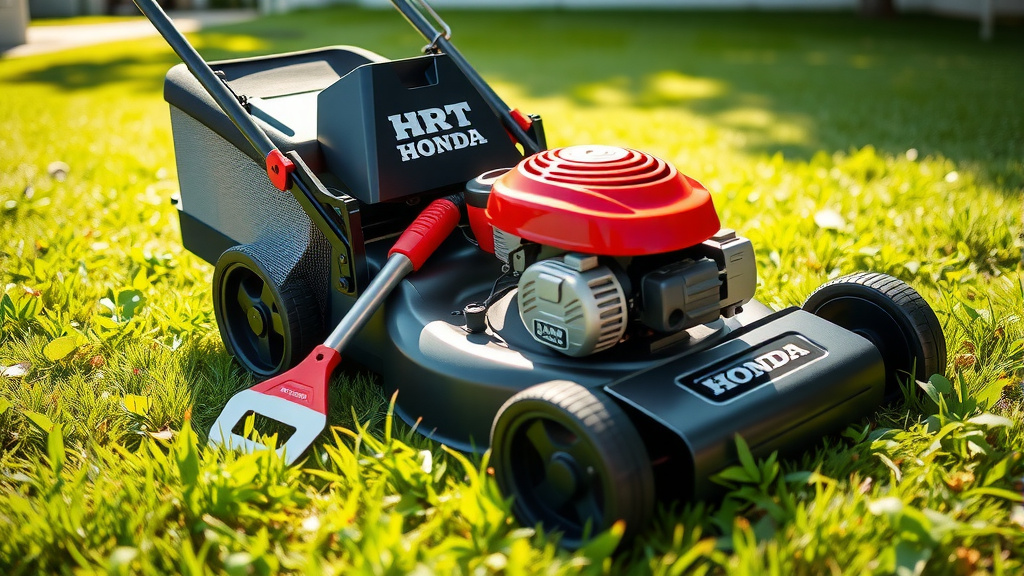
To set the governor on a Honda lawn mower, you first loosen the governor arm clamping bolt, then rotate the governor shaft fully counter-clockwise while holding the throttle lever at maximum engine speed.
This crucial adjustment synchronizes the governor arm with the internal governor mechanism, ensuring your engine maintains consistent RPMs under varying load conditions.
- Get ready to fine-tune your Honda mower’s speed for optimal cutting.
- The governor is like your mower’s cruise control, keeping the engine steady.
- You’ll need a few basic tools and a careful, patient approach.
- Safety first! Disconnect the spark plug before you begin any work.
- This guide will walk you through the steps to get your mower running just right.
How To Set The Governor On A Honda Lawn Mower?
Setting the governor on your Honda lawn mower involves adjusting the linkage to ensure your engine runs at the correct, consistent speed. This adjustment helps your mower maintain power and prevents it from bogging down under load, which leads to a much cleaner cut.
Why Your Mower’s Governor Matters So Much
Imagine driving a car without cruise control on a hilly road. Your foot would constantly adjust the gas pedal, right? That’s what the governor does for your lawn mower engine. It automatically adjusts the throttle to maintain a steady engine RPM, regardless of how thick the grass is. This means a consistent blade speed and a beautiful, even lawn.
Understanding How Your Governor Works
Honda lawn mowers typically use a mechanical governor system. This system consists of flyweights inside the engine, connected via a lever and rod system to the carburetor’s throttle plate. When engine speed increases, the flyweights move outward, which in turn moves the throttle towards the “closed” position, slowing the engine down. If the engine speed drops, the flyweights retract, opening the throttle to speed it up. This constant dance keeps your engine happy and efficient, we’ve found.
Tools You’ll Need For This Task
Before you dive in, gather these simple tools. Having them ready saves time and frustration, allowing you to focus on the task at hand. You want to make this process as smooth as possible.
- A socket set or an adjustable wrench
- A screwdriver (flathead or Phillips, depending on your model)
- Safety gloves (always a good idea!)
- Clean shop rags
- A tachometer (optional, but very helpful for precision)
Prioritize Safety: A Quick Reminder
Before touching anything on your mower, always disconnect the spark plug wire. This prevents any accidental starts while you are working near the engine and its moving parts. Remember, your safety is paramount. We want you to finish this job safely, every time.
Step-by-Step: Adjusting Your Honda Governor
Ready to get your hands a little dirty? This process is straightforward but requires careful attention to detail. Take your time, and you’ll do great. Many experts suggest following each step precisely for the best outcome.
Locate the Governor Linkage
First, find the governor arm and linkage connected to your carburetor. This is usually a small metal arm attached to a shaft that goes into the engine block. You’ll also see a spring or two connecting it to the throttle control lever.
Loosen the Clamping Bolt
On the governor arm, you’ll see a small bolt that clamps the arm to the governor shaft. Use your socket or wrench to loosen this bolt. You don’t need to remove it, just make it loose enough for the arm to rotate freely on the shaft.
Set the Throttle to Maximum RPM
Move your mower’s throttle control lever to the “Fast” or maximum speed position. This ensures the carburetor’s throttle plate is fully open, ready for maximum airflow. This is a critical step for proper synchronization.
Rotate the Governor Shaft
Now, grasp the governor shaft itself (the part that goes into the engine block) and rotate it fully counter-clockwise. Hold it firmly in this position. This action removes any slack in the internal governor mechanism.
Tighten the Clamping Bolt
While still holding the governor shaft counter-clockwise, reposition the governor arm so that it’s aligned and then tighten the clamping bolt securely. Make sure the arm doesn’t slip on the shaft during tightening. This locks the external arm into its correct position relative to the internal governor.
Test and Fine-Tune Your Mower
Reconnect the spark plug wire. Start your mower and listen to the engine. Does it sound steady? Take it for a test run in some grass. If you have a tachometer, you can check the RPMs against your mower’s specifications (usually found in your owner’s manual or on Honda’s website). Honda engine RPMs often hover around 3,000 to 3,600 RPM under load (Honda Power Equipment). Adjusting the governor spring tension can also slightly fine-tune the speed if needed, but start with the main linkage adjustment.
Common Governor Issues and Troubleshooting
Even with careful adjustment, sometimes issues can arise. Knowing what to look for helps you quickly diagnose and fix problems. Many times, a small issue can feel like a big one until you know the trick.
| Symptom | Possible Cause | Solution |
|---|---|---|
| Engine surges (speed goes up and down) | Dirty carburetor, weak governor spring, incorrect adjustment | Clean carburetor, check/replace springs, readjust governor |
| Engine runs too slow/fast | Incorrect governor adjustment, linkage bent/worn | Readjust governor, inspect linkage for damage |
| Engine bogs down under load | Insufficient governor response, dirty air filter, dull blade | Readjust governor, clean air filter, sharpen blade |
| Throttle linkage binds | Corroded linkage, improper assembly | Lubricate linkage, recheck assembly |
When to Call a Pro for Help
While adjusting your governor is a common DIY task, sometimes it’s best to call in the experts. If you’ve followed these steps and your mower still isn’t running right, or if you suspect internal engine damage, don’t hesitate. A professional technician has specialized tools and experience that can diagnose complex issues quickly and safely. Your local Honda dealer is often a great resource.
Maintenance Tips for Optimal Mower Performance
Keeping your governor happy is part of overall mower health. Regular maintenance keeps everything running smoothly, meaning fewer headaches for you. A well-maintained mower is a joy to use!
- Keep it Clean: Regularly clean grass clippings and debris from around the governor linkage.
- Check Springs: Inspect governor springs for stretching or damage. Replace them if they look worn.
- Lubricate Linkage: A tiny drop of light oil on pivot points can keep the linkage moving freely.
- Clean Air Filter: A dirty air filter starves the engine, impacting governor performance.
- Fresh Fuel: Stale fuel can cause engine surging, making you think the governor is at fault.
Conclusion
Setting the governor on your Honda lawn mower is a powerful way to restore its performance and ensure a consistent, clean cut every time you mow. By carefully following these steps – from safely preparing your mower to precise adjustments and thorough testing – you’re taking control of your lawn care. Remember, patience and attention to detail are your best friends here. With a properly set governor, your Honda mower will run like a dream, making lawn day a little less of a chore and a lot more satisfying. Happy mowing!
What is a lawn mower governor and what does it do?
A lawn mower governor is a mechanical device that regulates engine speed. It automatically adjusts the carburetor’s throttle plate to maintain a constant RPM, ensuring the engine doesn’t overspeed or slow down too much under varying loads, like when you hit thick grass.
How do I know if my Honda lawn mower governor needs adjustment?
You might need to adjust your governor if your mower engine surges (speeds up and slows down erratically), runs too fast or too slow consistently, or bogs down excessively when it encounters resistance from grass. Inconsistent engine speed is a common sign.
Can I adjust the governor without any special tools?
Yes, you can often adjust the basic governor linkage with common hand tools like a socket wrench or adjustable wrench and a screwdriver. A tachometer is helpful for precise RPM measurement but isn’t strictly necessary for the initial setup, we’ve found.
What happens if the governor is set too high or too low?
If the governor is set too high, the engine will over-rev, potentially causing premature wear, overheating, or even damage. If set too low, the engine will lack power, bog down easily, and deliver a poor cut, sometimes even stalling.
Is it normal for the governor springs to stretch over time?
Yes, governor springs can stretch, lose tension, or corrode over time, especially with exposure to heat and elements. This can affect the governor’s response and lead to inconsistent engine speeds. It’s a good idea to inspect and replace them if they appear worn.
