How to Use a Garden Pump Sprayer
To use a garden pump sprayer, fill it to the marked level, mix the liquid, pump until pressure builds, test the spray, and rinse it after use. Spray with steady passes, release pressure before opening, and store it empty and dry.
On this page (7 sections)
- What should you check before you fill a garden pump sprayer?
- How do you fill and pressurize a pump sprayer?
- How do you spray with a garden pump sprayer for even coverage?
- How do you clean a pump sprayer after spraying?
- When should you use a pump sprayer instead of a spreader?
- Which products help you choose the right tool for the job?
- How can you avoid common pump sprayer mistakes?
To use a garden pump sprayer safely, fill the tank, add the mix, build pressure, spray in steady passes, and clean it right after. That order gives even coverage without drips or leftover product in the hose.
Most pump sprayers work the same way. You pour liquid into the tank, seal the pump lid, and pump the handle to push air into the tank.
Pressure then forces liquid through the hose and nozzle when you open the valve.
Start with the product label before you fill anything. Keep kids and pets away until the spray has dried and the label says it is safe to reenter.
What should you check before you fill a garden pump sprayer?
Check the tank, seals, hose, wand, nozzle, and pressure release before every fill. A quick inspection prevents leaks, weak spray, and messy cleanup.
Look for cracks, stiff seals, and grit around the cap threads, and wipe the cap area clean. Clear the nozzle tip only with a soft brush or the tool the maker supplies.
Confirm you have the right liquid for the job. Our best pump sprayer for garden guide helps you match tank size and wand length to small beds, shrubs, and large lawns.
Wear the gear listed on the label, tie back loose sleeves, and keep the spray downwind of yourself.
How do you read the fill line and mix ratio?
Fill only to the marked line and mix at the rate on the label. Too much liquid leaves no room for air, and too strong a mix can harm plants.
Add clean water first when the label calls for dilution, then add the measured product. Some labels list a different order, so follow the label rather than a general habit.
Stir or shake only if the label calls for it, and pour slowly so foam does not push past the opening.
Keep a simple record of what you mixed and where you sprayed it. That note helps you avoid spraying the same bed twice and helps you plan the next treatment.
How do you fill and pressurize a pump sprayer?
Fill with water and product in the order the label states, seal the lid, and pump until the spray holds a steady pattern. Work outside, away from food, drink, and pet bowls.
Set the sprayer on flat ground and add liquid to the fill line, not the top. The pump needs air space to build pressure.
Wipe spills from the neck and threads, then tighten the lid. Pump with smooth strokes and test the spray on pavement or soil.
If it sputters, pump more. If it sprays in a hard stream, adjust the nozzle.
For a wider job, our best pump sprayer for weeds picks focus on wands and nozzles that help you aim at low weeds.
How much pressure is enough?
Use enough pressure to hold a steady fan or cone pattern without misting. Too little pressure gives drips and patchy coverage.
Too much pressure can turn the spray into fine mist that drifts.
Test the pattern close to the ground first. Aim at a patch of soil and watch the edges.
A steady pattern with clear edges is a good sign. Fine mist means you should lower pressure, move closer, or use a nozzle that makes larger drops.
What should you do if the sprayer leaks at the cap?
Stop, set the sprayer down, and release pressure before you touch the cap. A pressurized cap can pop off or spray liquid when you loosen it.
Check the seal for grit, cracks, or a twist. Clean the threads, reseat the seal, and tighten the cap again.
If liquid still leaks, the seal may need replacement or the tank may be overfilled. Do not keep spraying with a leaking cap.
How do you spray with a garden pump sprayer for even coverage?
Spray with steady, overlapping passes at a consistent distance from the plants. Keep the nozzle moving and the wand at a steady height.
Walk at an even pace and overlap each pass slightly. Stopping in one spot can soak that area while the next row stays dry.
Keep the nozzle pointed at the target, unless the label directs you to spray foliage from below. Spray in calm air to reduce drift and keep spray off blooming plants when bees are active.
For spot work on weeds, slow down and aim only at the weed. Our guide to how to use weed sprayer pump covers nozzle choice and pacing.
For general garden beds, a best small pump sprayer can be easier to control in tight rows.
How do you spray tall plants and low weeds differently?
Change your wand angle and distance for tall plants and low weeds. Tall plants often need spray from the side or slightly below the leaves.
Low weeds need a low, close aim that keeps liquid off surrounding plants. For shrubs and vegetables, spray the leaf surfaces the label targets.
Read the label before you decide where to aim. For weeds, keep the nozzle low and move slowly.
A narrow pattern helps treat the weed without wetting nearby grass or flowers. If the wand is too short, a best pump sprayer with long wand can keep your hands farther from the target.
How do you clean a pump sprayer after spraying?
Clean the tank, pump lid, hose, wand, and nozzle with clean water right after use. Leftover mix can clog the nozzle and harm plants on the next job.
Empty leftover liquid as the product label directs. Never pour it down a drain or onto plants unless the label allows it.
Rinse the tank, add clean water, shake it, and spray the rinse water through the nozzle outdoors in a safe spot. Repeat until the water runs clear and no odor remains.
Remove the nozzle if your sprayer allows it and rinse it separately. Wipe the hose and wand, and let all parts air dry with caps open.
If you switch products, rinse twice between jobs.
For bleach or stain jobs, see our best pump sprayer for bleach and best pump sprayer for stain guides for seal and material notes.
What should you never mix or store in a pump sprayer?
Never store mixed product in a sealed sprayer for long periods unless the label allows it. Old mix can lose strength, grow residue, or damage seals and hoses over time.
Do not mix two products unless both labels allow the mix. Some combinations can harm plants or create unsafe fumes.
Keep a sprayer marked for each type of product when you can, and rinse well before any switch.
Store the sprayer empty, clean, and dry with the cap loose or open if the maker directs it. Hang the wand and hose so they do not kink, and keep the sprayer away from heat and direct sun.
When should you use a pump sprayer instead of a spreader?
Use a pump sprayer for liquid products that need direct, even coverage on leaves, weeds, or soil. Use a spreader for dry, granular products that need wide coverage over a lawn.
A fertilizer spreader puts dry granules across a wide path as you walk or tow it. Many lawn plans use both tools at different times in the season.
That is why the products below focus on dry application. They do not replace a pump sprayer for liquid weed or insect products.
They help when your next job calls for seed, fertilizer, salt, or ice melt in granular form.
The Scotts Turf Builder EdgeGuard DLX Broadcast Spreader holds up to 15,000 sq.ft. of product. It comes pre-calibrated and ready to use, and its EdgeGuard side shield blocks the right side of the pattern to limit spread onto landscaping, driveways, and sidewalks.
That shield helps in narrow areas where overspread can waste product.
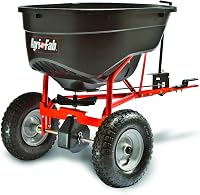
The Agri-Fab Pull Behind Broadcast Spreader for Seed suits larger properties. Its 130 lb hopper covers up to 1/2 acre or 25,000 sq ft with fewer refills.
The universal hitch fits most riding lawn mowers and lawn tractors, and the wide pattern helps you cover ground with fewer passes.
The Yhtpouqe Hand held Spreader suits spot work and small beds. Its 80 oz capacity reduces refills on short jobs, and the lid rotates to small, medium, and large openings for different particle sizes.
It includes a scoop and garden gloves, which helps with filling and handling.
Which products help you choose the right tool for the job?
Choose based on the form of the product and the size of the area. Liquid sprays call for a pump sprayer, and dry granules call for a spreader sized to your lawn.
For a small garden bed, a hand-held spreader can be enough for dry product. For a daily lawn, a walk-behind broadcast spreader gives wider, more even coverage.
For a large property, a tow-behind spreader saves time and refills.
If you plan to mount a sprayer on a mower, read How To Mount A Sprayer On A Lawn Mower? before you buy parts. That setup needs a careful check of hitch, tank, and hose fit.
For seal needs, compare best pump sprayer with viton seals if your mixes are harsh on standard seals. For brand-specific fits, see best chapin pump sprayer, best solo pump sprayer, and best pump sprayer with metal wand.
For insect jobs, our best pump sprayer for insecticides guide adds label and safety notes. Our Best Garden Tiller For Beginners guide can help you plan soil prep.
A best pump sprayer 2 gallon guide covers that size option for larger beds.
How can you avoid common pump sprayer mistakes?
Avoid overfilling, wrong mix rates, spraying in wind, and skipping the rinse. Most pump sprayer problems come from one of those four habits.
Overfilling leaves no air space, so pressure builds poorly and the cap can leak. A wrong mix rate can harm plants or waste product.
Wind turns a careful spray into drift on nearby beds, and skipping the rinse leaves residue that clogs nozzles.
Keep a short routine by your storage area. Check the sprayer, fill to the line, mix by the label, pump, test, spray in calm air, rinse, dry, and store.
For the closing rule on how to use garden pump sprayer equipment, pick the tool that fits the product form. Use a pump sprayer for liquid coverage, a hand spreader for small dry jobs, a walk-behind spreader for a daily lawn, and a tow-behind spreader for a large property.
Then start with our best pump sprayer for garden picks to match tank size, wand length, and nozzle type to your beds.
Frequently asked questions
How do I know when a pump sprayer has enough pressure?
Pump until you feel strong resistance and the spray pattern stays steady when you open the valve. Most hand sprayers need repeated pumping during a long job as pressure falls.
Test on a hard surface first, then adjust your pumping rhythm for even coverage.
Should I rinse a pump sprayer after every use?
Yes, rinse the tank, lid, wand, and nozzle after every use, especially after weed or insect products. Empty any leftover mix according to its label, then flush with clean water and spray it through the nozzle.
Let parts air dry before storage.
Can I use one pump sprayer for weeds and insects?
You can, but rinse it well between jobs and follow each product label. Residue from one mix can affect the next application and damage plants.
Many growers keep separate sprayers for weed products, insect products, and water-only jobs.
Why does my pump sprayer lose pressure while spraying?
Pressure falls as liquid leaves the tank, which is normal for a hand pump sprayer. Stop and pump again when the pattern weakens or turns to drips.
Also check for a clogged nozzle, a loose cap, or a low liquid level before you add more pressure.